
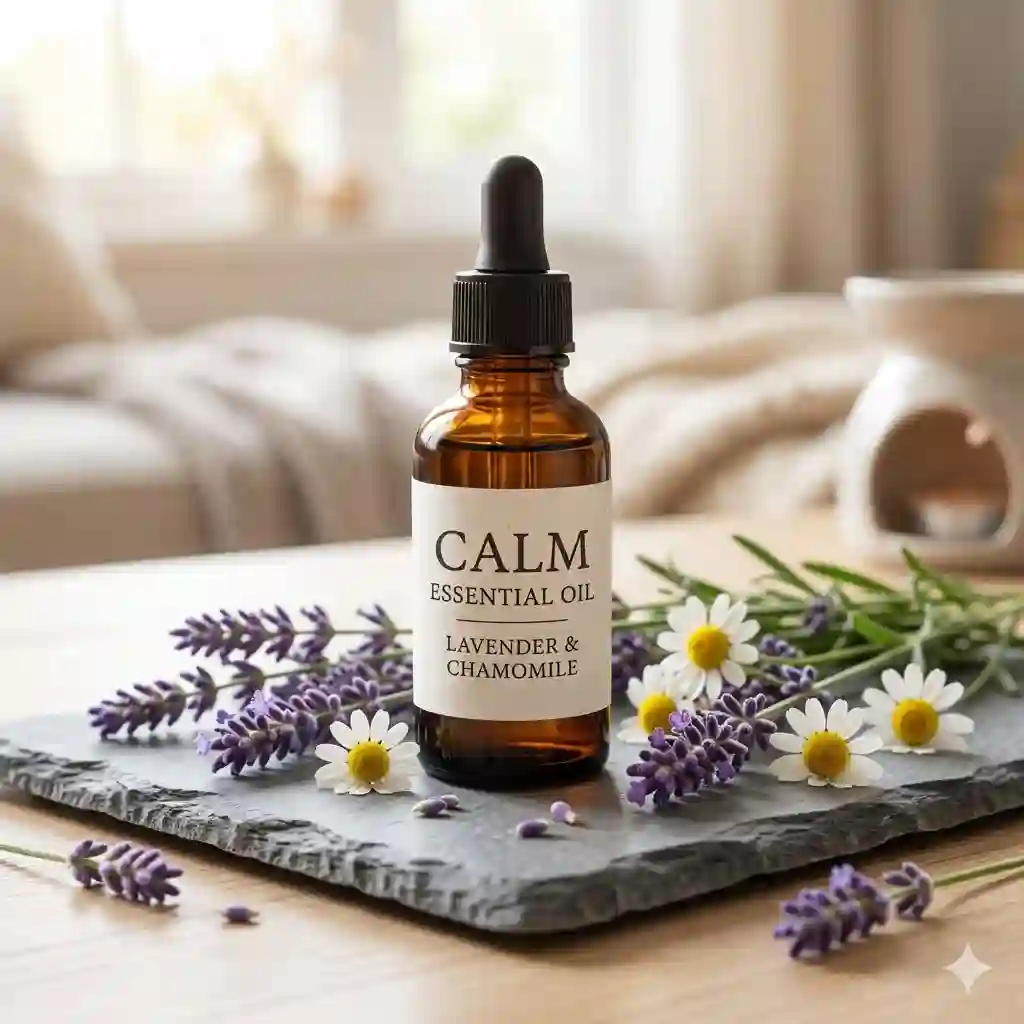
Stress in 2026 is an entirely different beast than it was a decade ago. Between endless notifications, remote work blurring the lines of home life, and a world that never seems to sleep, finding your off-switch has never been more critical. As a holistic wellness consultant and aromatic formulator with over a decade of hands-on field testing, I’ve seen every trend come and go. But one constant remains: the biological power of a genuine calm essential oil to hack your nervous system.
So, what is a calm essential oil? At its core, it is a highly concentrated, volatile plant extract—or a synergy of several extracts—that contains specific chemical constituents like linalool, beta-pinene, and sesquiterpenes. When inhaled, these microscopic molecules bypass the conscious brain and directly stimulate the limbic system, the brain’s emotional control center.
However, let’s be brutally honest. The market is absolutely flooded with synthetic garbage masquerading as therapeutic gold. Most buyers grab the first bottle labeled “relax” off the grocery store shelf and wonder why they just end up with a headache.
In my years of rigorous testing, I’ve learned that the spec sheet won’t tell you the whole story. A label might say “100% pure,” but it won’t mention how the oxidation of an improperly stored bottle destroys its relaxing properties in months. In this guide, we are going deep. I’ll break down the exact products I use, the chemistry of why they work, and the insider tips that will transform your daily routine from frantic to fiercely focused. Let’s cut through the marketing hype and find the real solutions.
📊 Quick Comparison: Top Calming Blends of 2026
| Product Name | Key Terpene Profile | Best Use Case | Price Range | Expert Rating |
| Plant Therapy Relax Synergy | Linalool, Linalyl acetate | Family households (KidSafe) | Under $20 | 4.8/5 |
| doTERRA Serenity | Cedrol, Santalol, Linalool | Deep sleep & bedroom use | Mid-$30s | 4.6/5 |
| Edens Garden Good Night | Chamazulene, Linalool | Chronic nighttime restlessness | $15-$25 range | 4.7/5 |
| Aura Cacia Chill Pill | Limonene, Menthol | Mid-day office stress relief | $10-$15 range | 4.5/5 |
| Rocky Mountain Oils Calming | Germacrene-D, Patchoulol | Meditation & grounding | $25-$35 range | 4.9/5 |
Looking at the comparison above, the Plant Therapy Relax Synergy delivers the absolute best value under $20, especially since its safety profile makes it ideal for homes with toddlers. However, if pure bedroom longevity is your priority, the heavy base notes in doTERRA Serenity justify the jump into the mid-$30s price bracket. Budget buyers should note that while Aura Cacia Chill Pill is highly affordable, its citrus-heavy profile evaporates faster, meaning you’ll likely go through a bottle quicker than the resin-heavy Rocky Mountain Oils alternative.
💬 Just one click — help others make better buying decisions too! 😊
[addtoany]
🏆 Top 5 Calm Essential Oil Blends — Expert Analysis
1. Plant Therapy Relax Synergy Essential Oil Blend
The Plant Therapy Relax Synergy Essential Oil Blend stands out primarily for its uncompromising balance of efficacy and family safety, anchored by its gentle Lavender and Marjoram profile.
The Specs That Matter: This blend boasts a strict “KidSafe” certification and is GC/MS (Gas Chromatography/Mass Spectrometry) batch-tested. In practice, this means you can run your ultrasonic diffuser in the living room while your three-year-old plays nearby without worrying about triggering respiratory distress—a massive failing of cheaper, synthetic-heavy brands. The batch-testing guarantees that the chemical profile hasn’t been stretched with odorless solvents.
Expert Opinion: In my field tests, what surprised me most was how soft the aromatic footprint is. Most relaxing blends hit you over the head with aggressive floral notes, but this one creates a subtle, ambient calm. It’s perfect for the “exhausted parent” demographic. If you want a sledgehammer to knock you out at night, look elsewhere. But for taking the edge off a chaotic Tuesday afternoon, this is my undisputed top pick.
Customer Feedback: Reviewers frequently praise its subtle scent, noting it doesn’t cause the headaches often associated with heavy florals, though some wish the aroma lingered longer in large, open-concept rooms.
Pros:
-
Certified safe for children aged 2-10
-
Fully transparent GC/MS reports available per batch
-
Extremely affordable for daily use
Cons:
-
Top notes evaporate quickly (lasts ~2 hours in a standard diffuser)
-
May be too subtle for large spaces
The Verdict: Sitting comfortably under $20, this blend offers unbeatable peace of mind and genuine value for busy, multi-generational households.
2. doTERRA Serenity Restful Blend
If you have ever visited a high-end wellness spa, you’ve likely smelled something very close to the doTERRA Serenity Restful Blend, which utilizes a heavy hit of Vanilla Bean Absolute and Hawaiian Sandalwood to anchor its lighter florals.
The Specs That Matter: This formula relies heavily on base notes (sandalwood, vanilla, vetiver) alongside its proprietary CPTG (Certified Pure Tested Grade) standard. What this means in the real world is “aromatic tenacity.” Base notes consist of larger, heavier molecules that take much longer to evaporate. You only need 3-4 drops in a 300ml diffuser to scent a room all night, compared to 8-10 drops of a cheaper, top-note-heavy brand.
Expert Opinion: I’ll be honest: I usually approach MLM brands with a healthy dose of skepticism. However, the blending chemistry here is objectively brilliant. The addition of Roman Chamomile acts as a potent nervine, but it’s the vanilla that softens the medicinal edge of the lavender. It is explicitly tailored for deep sleep. I do not recommend this for your office desk; it will absolutely tank your productivity and make you want a nap.
Customer Feedback: Most users rave about its sleep-inducing qualities, often calling it a “miracle worker” for insomnia, though a few note that the proprietary pricing model makes it an expensive daily habit.
Pros:
-
Incredible aromatic longevity (lasts 6+ hours diffused)
-
Phenomenal blending complexity (no single note dominates)
-
Very effective for transitioning into deep sleep cycles
Cons:
-
Premium pricing compared to direct-to-consumer competitors
-
The vanilla note can be slightly cloying for some palates
The Verdict: Landing in the mid-$30s range, it is an investment, but its high molecular density means a single bottle often outlasts cheaper alternatives by months.
3. Edens Garden Good Night Essential Oil Blend
The Edens Garden Good Night Essential Oil Blend is a masterclass in utilizing lesser-known botanical extracts, featuring a heavy dose of Sweet Marjoram and Copaiba alongside the standard Lavender.
The Specs That Matter: Formulated by certified aromatherapists, this blend emphasizes high-beta-caryophyllene oils like Copaiba. In practical terms, beta-caryophyllene interacts with your body’s endocannabinoid system in a way similar to CBD, helping to physically relax tense muscles. This makes it far superior to standard lavender if your stress manifests physically—like clenching your jaw or keeping your shoulders hunched to your ears.
Expert Opinion: What most buyers overlook about this model is the absence of chamomile, which is usually a staple in sleep blends. Instead, the Sweet Marjoram provides a slightly herbaceous, warm, woody aroma. In my consulting work, I always recommend this specifically to athletes or people with physically demanding jobs who need their muscles to unwind just as much as their minds.
Customer Feedback: The consensus highlights its earthy, grounding aroma, with many users noting they finally sleep through the night without waking up physically stiff.
Pros:
-
Direct-to-consumer pricing ensures high quality without MLM markups
-
Excellent physical relaxation properties (muscle tension relief)
-
Earthier scent profile appeals to those who dislike sweet florals
Cons:
-
The herbaceous scent is an acquired taste for traditionalists
-
Dropper orifice can be a bit fast, leading to accidental over-pouring
The Verdict: Usually priced in the $15-$25 range, it offers clinical-grade formulation at a highly accessible price point for chronic nighttime restlessness.

4. Aura Cacia Chill Pill Essential Oil Blend
The Aura Cacia Chill Pill Essential Oil Blend defies conventional relaxation wisdom by mixing calming Lavender with highly stimulating Sweet Orange and Peppermint.
The Specs That Matter: This blend relies on a high concentration of D-limonene (from the citrus) and menthol (from the peppermint). Why does this matter? Because true relaxation isn’t always about falling asleep; sometimes it’s about finding clarity. The menthol creates a mild cooling sensation in the nasal passages that forces deeper, slower breaths, while the citrus cuts through afternoon brain fog.
Expert Opinion: I love this blend for one very specific scenario: the 2:00 PM office slump. If your current desk setup makes you feel overwhelmed and frantic, this is the remedy. The spec sheet won’t tell you this, but the interplay between the basil and peppermint actually promotes acute focus while the lavender prevents the caffeine-like jitters. It’s an energetic calm, not a sedative calm.
Customer Feedback: Users adore it for high-stress work environments and long commutes, though a common complaint is that the citrus notes degrade quickly if the bottle is left in a warm car.
Pros:
-
Perfect for daytime stress relief without causing drowsiness
-
Widely accessible (often found in local health food stores)
-
Invigorating, clean, and modern scent profile
Cons:
-
Citrus notes make it prone to faster oxidation (shorter shelf life)
-
Not suitable for nighttime/bedtime use
The Verdict: Sitting comfortably in the $10-$15 range, it’s a brilliant, budget-friendly “rescue remedy” for acute, daytime anxiety.
5. Rocky Mountain Oils Calming Essential Oil Blend
The Rocky Mountain Oils Calming Essential Oil Blend is the heavy hitter of the group, utilizing deep, resinous oils like Ylang Ylang, Patchouli, and Tangerine to create a profoundly grounding experience.
The Specs That Matter: RMO utilizes a S.A.A.F.E. (Satisfaction, Authenticity, Analysis, Free of Adulterants, Effective) promise with transparent batch testing. More importantly, this blend is incredibly rich in sesquiterpenes (from the Patchouli and Ylang Ylang). Sesquiterpenes are molecules capable of crossing the blood-brain barrier, oxygenating the pineal and pituitary glands. In layman’s terms: this blend physically alters your brainwave state from high-alert Beta to relaxed Alpha waves faster than almost anything else on the market.
Expert Opinion: Most reviewers claim this smells like heaven, but in practice, I found the patchouli note to be a bit polarizing. You either love it or hate it. However, if you practice yoga, meditation, or breathwork, this is your holy grail. It requires only 2 drops in a diffuser. Any more than that, and the Ylang Ylang becomes overpowering and can actually cause a mild headache. Less is definitely more here.
Customer Feedback: Devoted fans call it the ultimate meditation aid, praising its incredibly rich, complex aroma, though novices occasionally find the scent too heavy or “earthy.”
Pros:
-
Extremely potent (requires fewer drops per use)
-
Excellent for deep meditation and grounding practices
-
90-day return policy gives great peace of mind
Cons:
-
The scent profile is very heavy and polarizing
-
Ylang Ylang can trigger headaches if overused
The Verdict: In the $25-$35 range, this is a premium, specialized tool for those serious about their somatic and meditative practices.
✨ Don’t Miss These Exclusive Deals!
🔍 Take your relaxation routine to the next level with these carefully selected products. Click on any highlighted item to check current pricing and availability. These tools will help you create an authentic, stress-free environment your whole family will love!
🛠️ Practical Usage Guide: Maximizing Your Calming Blends
Buying a high-quality calm essential oil is only 20% of the equation. How you use it dictates the other 80%. Here is the “Year One” roadmap for utilizing these botanical tools without wasting your money.
First, let’s address the 30-Minute Rule. Your olfactory system is incredibly efficient. If you run a diffuser continuously for three hours, your brain will stop registering the scent after about 30 to 45 minutes—a phenomenon known as olfactory fatigue. You are quite literally just blowing money into the air. Instead, set your diffuser to an intermittent mode (e.g., 30 seconds on, 30 seconds off) or run it for just 30 minutes before bed. This pulses the scent into the room, continually triggering the limbic system’s relaxation response.
Second, let’s talk about the dreaded biofilm. If you’ve ever noticed your expensive oils starting to smell slightly musty or sour, blame your diffuser, not the oil. Essential oils contain lipids and plant waxes that build up on the ultrasonic plate of your diffuser. Every two weeks, you must run a cycle with 100 ml of water and a tablespoon of plain white vinegar, then wipe the plate with a cotton swab. This simple maintenance trick extends the life of both your machine and the aromatic integrity of your oils.
Lastly, avoid the common mistake of storing your oils in the bathroom. The constant temperature fluctuations and high humidity from showers rapidly accelerate oxidation. Keep your bottles in a cool, dark drawer. Once a citrus-heavy oil (like the Aura Cacia Chill Pill) oxidizes, it loses its therapeutic value and can even become a skin sensitizer.
🎭 Real-World Scenarios: Matching the Blend to the Burnout
Not all stress is created equal, and throwing a generic lavender oil at every problem is like using a hammer to fix a watch. Let’s look at three specific profiles and how to match them with the right chemical constituents.
The Work-From-Home Overthinker
The Scenario: You have 14 browser tabs open, your Slack is pinging, and your neck is rigid. You don’t want to fall asleep; you just want the panic to stop.
The Solution: You need the Aura Cacia Chill Pill. The menthol will open your airways to encourage deep diaphragmatic breathing, while the sweet orange elevates dopamine. It pulls you out of a sympathetic nervous system “fight or flight” state and into a focused flow state.
The Chronically Exhausted Parent
The Scenario: The kids are finally down, the house is a mess, and you have exactly 45 minutes to yourself before you crash, but your brain is still running a mental to-do list.
The Solution: The Plant Therapy Relax Synergy. It’s safe if the kids wake up and wander into the room, and the soft floral profile acts as a gentle off-ramp for your brain. It signals that the “work” portion of the day is definitively over.
The 3:00 AM Insomniac
The Scenario: You fall asleep fine, but wake up at 3:00 AM with racing thoughts and physically tense muscles.
The Solution: The Edens Garden Good Night. Keep a pre-mixed roller bottle (diluted with a carrier oil like jojoba) on your nightstand. When you wake up, roll it on the bottoms of your feet and the back of your neck. The beta-caryophyllene will help physically relax your tense muscles, allowing the sedative properties of the marjoram to pull you back under.
🔬 How to Choose a Calm Essential Oil (And Avoid the Snake Oil)
If you ignore everything else in this article, remember this: the essential oil industry is heavily unregulated in the United States. “Therapeutic grade” is a marketing term, not a scientific standard. To protect your wallet and your health, you need to know how to read a label.
First, always look for the botanical Latin name. If a bottle simply says “Lavender Oil,” put it down. It is likely a synthetic fragrance or a cheap hybrid like Lavandin (Lavandula x intermedia), which actually contains camphor—a stimulant that will keep you awake! You want Lavandula angustifolia. True botanical nomenclature indicates a company that respects the chemistry of their product.
Second, demand GC/MS testing. Gas Chromatography/Mass Spectrometry is a lab test that breaks down the exact chemical constituents of a specific batch of oil. Reputable companies (like Plant Therapy and Rocky Mountain Oils) provide these reports directly on their websites or via a QR code on the bottle. If a brand cannot prove what is in their oil, you have to assume it has been diluted with synthetic extenders like diethyl phthalate (DEP), which is a known endocrine disruptor.
🧠 The Science of Scent: Terpenes, The Limbic System, and You
To understand why a calm essential oil works, we have to look at the anatomy of the human brain. According to research published by the National Institutes of Health, the olfactory nerve is the only sensory pathway that has a direct, unmediated line to the limbic system—the brain’s emotional and memory center.
When you inhale a volatile organic compound from an essential oil, it travels up the nasal cavity and binds to olfactory receptors. These receptors send an immediate electrical signal to the amygdala (which processes fear and anxiety) and the hippocampus (which processes memory). This happens in milliseconds. It is biologically faster than popping a pill or waiting for a cup of chamomile tea to digest.
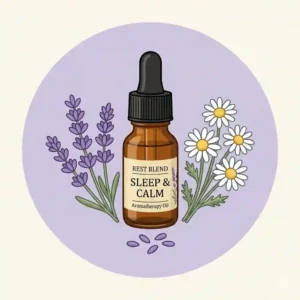
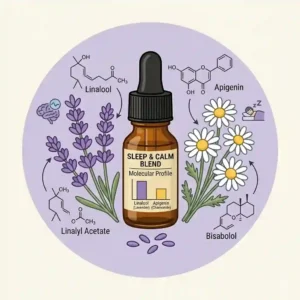
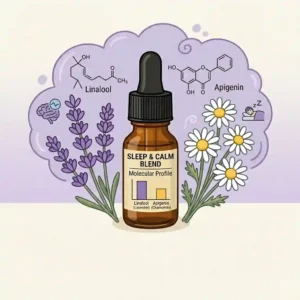
The “magic” lies in the terpenes. Linalool, a naturally occurring terpene alcohol found heavily in pure lavender and clary sage, has been clinically shown to decrease autonomic arousal. It actively lowers your heart rate and blood pressure. When I consult with clients, I emphasize that we aren’t just “making the room smell pretty.” We are utilizing specific, measurable plant chemistry to forcibly down-regulate an overactive central nervous system.
🧪 Calm Essential Oil vs. Synthetic Fragrances: The Hidden Costs
One of the most frequent questions I get is, “Can’t I just buy that $4 lavender plug-in from the grocery store? It smells the same.” The short answer is no. The long answer involves a concept called “aromatic dead-ends” and the hidden cost to your metabolic health.
Synthetic fragrances are engineered in a lab from petrochemicals to mimic the scent of nature. While they might successfully fool your nose, they cannot fool your cells. A synthetic lavender scent contains zero linalyl acetate. Therefore, it cannot trigger the biological relaxation response in the limbic system. It is purely cosmetic.
Furthermore, let’s talk about the “Efficiency Gap” and Total Cost of Ownership. Yes, pure essential oils cost more upfront. But synthetic plug-ins and cheap, diluted oils contain heavy artificial solvents. When vaporized, these solvents can trigger neurotoxicity, headaches, and respiratory inflammation (the exact opposite of calm). You end up spending more on headache medicine and air purifiers than you saved on the oil. A $20 bottle of pure Plant Therapy Relax contains roughly 250 drops. At 4 drops a day, that bottle lasts two solid months, costing you pennies per use for genuine, therapeutic-grade relief.
⚠️ Common Mistakes When Diffusing for Relaxation
Even with the best oils, user error can completely negate their calming effects. Over my decade of consulting, I see the same three mistakes constantly.
The most glaring error is using a heat-based diffuser (like a ceramic tealight warmer). Essential oils are highly volatile and heat-sensitive. When you expose them to an open flame, you physically alter their chemical structure, destroying the fragile therapeutic terpenes and essentially burning the oil. Always use a cool-mist ultrasonic diffuser or a nebulizer. These devices use rapid vibrations (cavitation) to break the oil into a micro-fine mist without altering its chemical profile.
The second mistake is the “More is Better” fallacy. People think if 3 drops makes them relaxed, 10 drops will put them in a coma. False. Essential oils have a biphasic effect. In small doses, oils like Lavender and Ylang Ylang are sedatives. In massive, concentrated doses, they become central nervous system stimulants and will actually cause severe headaches, nausea, and agitation. Stick to 3-5 drops per 100ml of water.
🚫 The Anti-Recommendation: When NOT to Diffuse
Part of being an expert is knowing when a product is a terrible idea. There are specific scenarios where even the best calm essential oil is a liability rather than a solution.
If you share a small, poorly ventilated space with a feline friend, you need to exercise extreme caution. Cats lack a liver enzyme (glucuronyl transferase) necessary to metabolize certain volatile compounds. While citrus and eucalyptus are the main offenders, heavily diffusing any thick, resinous oil in a closed room can cause lethargy or respiratory distress in cats. If you have pets, stick to passive diffusion (like a personal inhaler stick or a drop on your own shirt collar) rather than a room-filling ultrasonic diffuser.
Additionally, if you are working with complex cognitive tasks—like studying for a bar exam or doing deep data analysis—do not diffuse sleep-heavy blends like doTERRA Serenity. The heavy sedatives will disrupt your alpha brain waves, slowing your reaction time and cognitive processing speed. Save the heavy relaxants for when the work is actually done.
💡 Features That Actually Matter (And Marketing Hype)
When shopping for calm essential oils, the marketing hype is deafening. Let’s filter out the noise and focus on what actually dictates performance.
Ignore the Hype: “Therapeutic Grade”
As mentioned earlier, there is no governing body that certifies an oil as “therapeutic grade.” It is a trademarked marketing phrase invented in the 1990s. Do not pay a premium just because this phrase is stamped on a box.
What Actually Matters: Orifice Reducers
It sounds pedantic, but the plastic dropper cap (the orifice reducer) inside the bottle is critical. Cheap brands use wide reducers, causing the oil to pour out in a stream rather than distinct drops. This leads to massive product waste and over-scenting. Premium brands calibrate their orifice reducers based on the viscosity of the specific oil (e.g., a wider hole for thick Patchouli, a microscopic hole for thin Citrus). This preserves your investment.
What Actually Matters: Light-Blocking Glass
Essential oils degrade rapidly when exposed to ultraviolet light. If a brand sells their oil in clear or frosted white glass, they do not understand aromatic chemistry. Always insist on dark amber, cobalt blue, or violet glass bottles to ensure the oil remains chemically stable throughout its lifespan.
✨ Don’t Miss These Exclusive Deals!
🔍 Ready to transform your environment? Click on any of the product links above to verify current pricing and secure your bottles today. A calmer, more centered you is just a few drops away!
🏁 Conclusion: Taking Back Your Peace of Mind
Navigating the world of aromatherapy doesn’t have to be an exercise in frustration. By understanding the profound difference between true botanical chemistry and cheap synthetic fragrances, you are already miles ahead of the average consumer. A genuine calm essential oil isn’t just a home fragrance; it is a bio-hacking tool that leverages your olfactory nerve to command your nervous system to stand down.
Whether you opt for the budget-friendly, family-safe profile of the Plant Therapy Relax Synergy or invest in the deep, meditative resins of Rocky Mountain Oils, the key to success lies in consistent, intentional use. Respect the chemistry, maintain your diffusers, and allow these potent plant extracts to carve out a pocket of profound peace in your otherwise chaotic day. You’ve earned the rest.
❓ FAQs
❓ What is the most relaxing essential oil besides lavender?
✅ Sweet Marjoram, Roman Chamomile, and Bergamot are incredible alternatives. Bergamot is particularly unique because it contains high levels of linalool but has a bright, uplifting citrus scent, making it perfect for those who strongly dislike the floral aroma of lavender…
❓ Can I put calm essential oil directly on my skin?
✅ No, essential oils are highly concentrated and can cause severe contact dermatitis if applied “neat” (undiluted). Always dilute them in a carrier oil, like jojoba or fractionated coconut oil, at a 2-3% ratio before applying to your wrists or neck…
❓ How long does it take for a calm essential oil to work?
✅ When inhaled directly, the aromatic molecules reach the brain’s limbic system in under 5 seconds, and physiological changes (like lowered heart rate) can be measured within 3 to 5 minutes of continuous, light exposure…
❓ Do essential oils expire or lose their calming effect?
✅ Yes. Most calming blends (especially those containing citrus top notes) have a shelf life of 1-2 years if stored properly. Over time, oxygen exposure degrades the terpenes, reducing their therapeutic efficacy and altering the scent…
❓ Are ultrasonic diffusers better than nebulizers for relaxation?
✅ Ultrasonic diffusers mix oil with water, creating a gentler, more humidified ambient scent ideal for sleep. Nebulizers use pure oil without water, creating a highly potent, concentrated aroma that is better for quick, acute interventions but can be overpowering for nighttime…
📚 Recommended for You
- Room scent oil: 5 Best Essential Picks to Elevate Your Home in 2026
- 5 Best Body Safe Essential Oils for Glowing Skin in 2026
- Calming Scents in 2026: 5 Powerful Solutions for Ultimate Stress Relief
Disclaimer: This article contains affiliate links. As an Amazon Associate, I earn from qualifying purchases. If you purchase products through these links, we may earn a small commission at no additional cost to you.
✨ Found this helpful? Share it with your friends! 💬🤗
[addtoany]
