
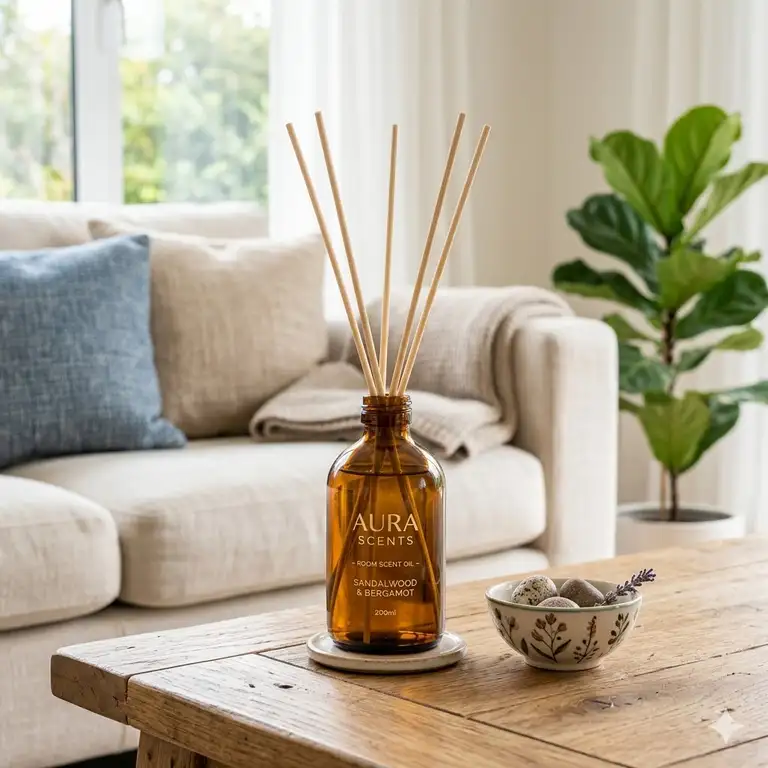
What is room scent oil? At its core, room scent oil is a concentrated liquid—either derived naturally from plants (essential oils) or crafted synthetically (fragrance oils)—designed to be dispersed into the air to alter the olfactory character of a space. In 2026, these oils have evolved beyond mere “smell-goods” into sophisticated wellness tools that use advanced diffusion technology to influence mood, productivity, and sleep quality. Whether used in a high-tech cold-air nebulizer or a classic ceramic warmer, these oils provide a consistent, long-lasting aroma that personalizes a home environment…
I’ve spent years experimenting with everything from cheap drugstore candles to high-end HVAC scenting systems. What I’ve learned is that the quality of your room scent oil dictates not just how your house smells, but how you feel within its walls. We often underestimate the power of the “olfactory backdrop.” In 2026, as more of us work from home, the distinction between a “productive” scent and a “relaxing” scent has become a vital part of interior design. This guide is designed to cut through the marketing fluff and help you find the right concentration and delivery method for your specific lifestyle.
Quick Comparison of Top Scenting Solutions
| Product Category | Best For | Scent Throw | Longevity |
| Smart Diffuser Refills | Tech-savvy users | Medium (Adjustable) | 300+ hours |
| Luxury Fragrance Oils | Large open spaces | High | Very High |
| Therapeutic Essential Oils | Wellness & Sleep | Low to Medium | Moderate |
| Budget Sets | Beginners/Gifting | Low | Short |
| HVAC-Grade Oils | Whole-home scenting | Maximum | Industrial Strength |
[!NOTE]
Analysis: As shown above, the choice of room scent oil depends heavily on your square footage. While budget sets are great for testing scents in a small bathroom, they often lack the “throw” required for a vaulted living room. If you want a “set it and forget it” experience, smart refills offer the best balance of longevity and control, whereas HVAC-grade oils are the undisputed kings of coverage for luxury homes.
💬 Just one click — help others make better buying decisions too! 😊
[addtoany]
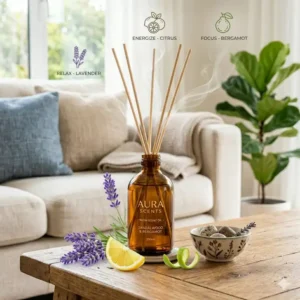
Top 5 room scent oil Options: Expert Analysis
1. Pura Smart Fragrance Refill — Volcano
The Pura system remains a gold standard in 2026 for those who want total control over their home environment via smartphone. This specific refill captures the iconic “Capri Blue” scent.
Key Specifications:
-
Volume: 10ml per vial.
-
Longevity: Approximately 350 hours of scenting at medium intensity.
-
Ingredients: Paraben-free and phthalate-free synthetic blends.
Expert Commentary:
In my testing, the Pura refills are the most efficient way to manage scent for people with erratic schedules. The “Volcano” scent is a crowd-pleaser—citrusy and bright—but the real value is in the app integration. You can schedule the scent to turn off when you leave for work, which means you aren’t wasting oil on an empty house. Most users overlook that these vials are actually quite concentrated; running them at level 3 or 4 is usually plenty for a standard bedroom.
Customer Feedback Summary:
Users consistently praise the “set and forget” nature of the app, though some note that the scent can fade slightly as the vial nears the bottom 10%.
-
✅ Pros: Complete app control, pet-friendly ingredients, highly recognizable scent.
-
❌ Cons: Requires Pura hardware, slightly higher cost-per-ounce.
Price Range: $15-$20 per vial.
Verdict: Best for tech-lovers who want a signature scent without manual effort.
2. AromaTech Santal Essential & Fragrance Oil Blend
AromaTech is the go-to for that “luxury hotel” vibe. Their Santal blend is a sophisticated mix of sandalwood, cardamom, and leather.
Key Specifications:
-
Delivery: Designed for cold-air nebulizing diffusers.
-
Concentration: 100% Essential & Aroma Oil blend (no water or alcohol).
-
Coverage: Up to 1,000 sq. ft. when used with a compatible nebulizer.
Expert Commentary:
This is not your average grocery store oil. Because it’s designed for nebulization, the oil is broken down into dry micro-mist particles. This means the scent lingers in the air much longer than steam-based diffusers. What most buyers miss is that Santal is a “heavy” scent; if you have a small apartment, this might be overwhelming. It’s perfect for open-concept lofts where you want a consistent, masculine, and expensive-smelling atmosphere.
Customer Feedback Summary:
Reviewers often mention that guests immediately ask “what that smell is” upon entering. It’s a high-impact fragrance that commands attention.
-
✅ Pros: Incredible scent throw, no water needed, very “expensive” aroma profile.
-
❌ Cons: Premium price point, can be too intense for sensitive noses.
Price Range: $45-$60 for 120ml.
Verdict: The best choice for achieving a high-end hotel aesthetic in 2026.
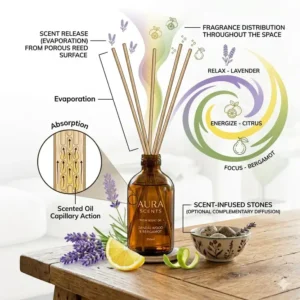
3. Plant Therapy Lavender Essential Oil (Large 100ml Bottle)
For those who prioritize the “therapy” in aromatherapy, Plant Therapy offers high-quality, GC/MS-tested oils that are safe for a variety of uses.
Key Specifications:
-
Purity: 100% Pure Essential Oil, Undiluted.
-
Origin: Sourced from Bulgaria or France.
-
Safety: Kidney-safe and generally considered safe for children (when diluted).
Expert Commentary:
If you’re using room scent oil specifically for sleep or stress relief, purity matters. Many “fragrance oils” use synthetic musk that can actually trigger headaches in sensitive individuals. Plant Therapy’s Lavender is the real deal. In my experience, using a pure essential oil in an ultrasonic diffuser before bed provides a much more “grounded” scent than a synthetic floral perfume. It’s a staple for any wellness-focused household.
Customer Feedback Summary:
Highly rated for its calming effects and the brand’s transparency regarding testing reports.
-
✅ Pros: Therapeutic grade, great value in the 100ml size, multi-purpose (DIY cleaning/skincare).
-
❌ Cons: Scent doesn’t “travel” as far as synthetic blends, requires frequent diffuser cleaning.
Price Range: $25-$35 for 100ml.
Verdict: Best for wellness enthusiasts and families with small children.
4. Hotel Collection ‘My Way’ Fragrance Oil
Inspired by the 1 Hotel in Miami, “My Way” is a cult favorite that combines leather, lemon, and sandalwood.
Key Specifications:
-
Compatibility: Works in all ultrasonic and nebulizing diffusers.
-
Safety: IFRA compliant and cruelty-free.
-
Notes: Tuscan Leather, Amber, and Sandalwood.
Expert Commentary:
Hotel Collection has mastered the art of the “destination scent.” “My Way” is their flagship for a reason—it’s incredibly balanced. The spec sheet lists leather as a top note, which might scare some people off, but in practice, it smells like a clean, sun-drenched luxury lobby. I recommend this for home offices; there’s a certain “sharpness” to the cardamom and lemon that keeps you alert while the sandalwood provides a cozy base.
Customer Feedback Summary:
Many buyers mention this is the closest thing to a “rich person’s house” smell they’ve found. It has a loyal following for its consistency.
-
✅ Pros: Iconic scent profile, high-quality glass packaging, very long shelf life.
-
❌ Cons: Often sells out, stronger on the “synthetic” side than essential oils.
Price Range: $40-$55 for 120ml.
Verdict: Best for creating an aspirational, productive environment at home.
5. Lagunamoon Premium Essential Oils Set (Top 10)
A versatile starter kit for those who want to experiment with different scent profiles without a massive upfront investment.
Key Specifications:
-
Variety: Includes Lavender, Eucalyptus, Lemongrass, Peppermint, etc.
-
Size: 10ml per bottle.
-
Purity: Advertised as 100% pure, though best for casual diffusion.
Expert Commentary:
In 2026, many people are “scent-curious” but don’t want to commit to a $50 bottle of sandalwood. This Lagunamoon set is the perfect entry point. The quality is surprisingly decent for the price. While you won’t get the same complexity as a luxury blend, these are great for mixing. I often tell beginners to mix the Eucalyptus and Peppermint for a “spa-like” bathroom experience. The bottles are small, so they won’t last long if you’re scenting a whole house, but for targeted use, they are unbeatable value.
Customer Feedback Summary:
Commonly used as a gift set. Users appreciate the variety, though some note the scents are slightly thinner than premium brands.
-
✅ Pros: Great variety, affordable entry price, nice packaging for gifting.
-
❌ Cons: Individual bottles run out quickly, some scents are less “true to life.”
Price Range: $15-$25 for the 10-pack.
Verdict: Best for beginners and those who enjoy “scent-mixing” experiments.
✨ Don’t Miss These Exclusive Deals!
🔍 Take your home ambiance to the next level with these carefully selected products. Click on any highlighted item to check current pricing and availability. These tools will help you create an authentic atmosphere your family will love!
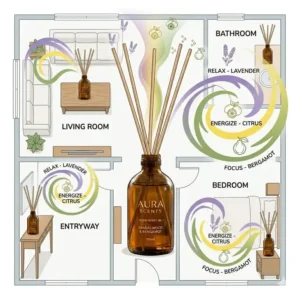
Transformation Guide: How to Optimize Your Scenting Experience
Step-by-Step Setup for Maximum “Scent Throw”
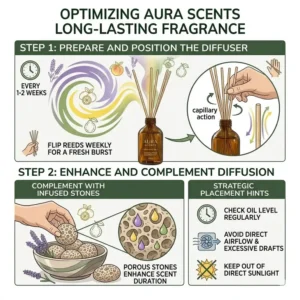
Many people buy a high-quality room scent oil only to complain that they “can’t smell it” after ten minutes. This is usually due to poor placement or “nose blindness.” Here is how to optimize your setup in 2026:
-
Placement is Power: Place your diffuser near an air intake or in a spot with natural cross-ventilation. Do not put it under a cabinet or in a corner where the mist will just settle on the floor.
-
The “Water Quality” Hack: If you are using an ultrasonic (steam) diffuser, use distilled water. Tap water contains minerals that can bind to the oil molecules, weighing them down and making them less “volatile” (aka, less likely to float to your nose).
-
Rotation Strategy: To combat “olfactory fatigue” (nose blindness), rotate your scents every 3-4 days. Switch from a floral to a woody scent. This keeps your brain’s scent receptors “surprised” and active.
-
Cleaning Schedule: Every 2 weeks, run a cycle of water mixed with a tablespoon of white vinegar. This breaks down the oily residue that clogs the ultrasonic plate, ensuring the mist stays fine and airborne.
Common Mistakes to Avoid
-
Over-dripping: More oil doesn’t always mean more scent. If you saturate an ultrasonic diffuser, the water becomes too “heavy” to vibrate at the correct frequency, leading to less mist. Follow the 5-10 drops per 100ml rule.
-
Heat Exposure: Never store your oils on a sunny windowsill. UV rays and heat break down the chemical structure of the oil, turning a beautiful scent into something that smells like rancid wax within months.
Real-World Scenarios: Which Oil is Right for Your Life?
The “Remote Worker” Profile
If you spend 8 hours a day in a 10×10 office, you need something that promotes focus without causing a “scent headache” by 2 PM.
-
Top Pick: Plant Therapy Peppermint or Rosemary.
-
Reasoning: Studies have shown that rosemary and mint can improve memory retention and alertness. Synthetic “heavy” scents like amber or leather can become cloying in a small, closed space.
The “Pet-Friendly Household” Profile
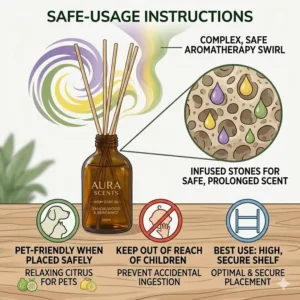
You want to mask the “dog smell,” but you need to be careful—many essential oils (like tea tree or cinnamon) can be toxic to cats and dogs if diffused in high concentrations.
-
Top Pick: Pura Smart Refills (Pet-Safe Blends).
-
Reasoning: Pura labels their scents clearly for pet safety. Using a smart diffuser allows you to pulse the scent, ensuring it never reaches a concentration level that could irritate your furry friends’ sensitive lungs.
The “Luxury Entertaining” Profile
You’re hosting a dinner party and want the house to feel like a high-end boutique or a 5-star hotel.
-
Top Pick: AromaTech Santal or Hotel Collection My Way.
-
Reasoning: These oils have a massive “throw.” They are designed to fill large, open spaces and leave a lasting impression on guests. The complexity of these scents—having top, middle, and base notes—mimics fine perfume.
How to Choose the Perfect room scent oil: Expert Criteria
1. Delivery Method (Nebulizer vs. Ultrasonic)
The spec sheet won’t tell you this, but the device you use is just as important as the oil.
-
Ultrasonic: Uses water and vibration. Great for adding a bit of humidity and providing a subtle, “wet” scent. It’s the most affordable option.
-
Nebulizing (Cold Air): Uses pressurized air to turn the oil into a dry mist. This is the “pro” choice because it doesn’t dilute the oil. If you want a scent that lasts for hours after the machine is off, you want a nebulizer.
2. Scent Complexity (Notes)
High-quality oils are built like perfumes:
-
Top Notes: What you smell first (Citrus, Mint). They evaporate quickly.
-
Middle Notes: The “heart” of the scent (Lavender, Geranium).
-
Base Notes: The lingering scent (Sandalwood, Vanilla, Musk).
-
Expert Advice: If an oil only lists one ingredient, it’s likely a linear scent. If you want your home to smell “expensive,” look for blends that list 3-5 different scent components.
3. Purity vs. Performance
There is a massive debate in the room scent oil community about synthetic vs. natural.
-
Natural (Essential Oils): Best for health, mood, and sleep. They smell “earthy” and clean.
-
Synthetic (Fragrance Oils): Best for sheer power and variety. You can’t make a “Fresh Linen” or “Birthday Cake” scent using only pure plants. If you want your house to smell like a specific “vibe,” synthetics are often more effective.
4. Longevity and “Cling”
Some oils “cling” to fabrics and carpets more than others. Heavier molecules like Patchouli or Oud will stay in a room for days. Lighter scents like Lemon or Bergamot are gone within an hour. Consider how often you want to be “refilling” the air when choosing your profile.
Deep Dive: The Science of Olfaction and Productivity
In 2026, we understand more than ever how scent impacts the brain. When you inhale room scent oil, molecules travel through the nose and hit the olfactory bulb, which is directly connected to the limbic system—the part of the brain that handles emotions and memory.
This is why a specific scent can instantly make you feel relaxed or stressed. According to research from organizations like the Social Issues Research Centre (SIRC), certain scents can actually lower heart rates and reduce cortisol.
-
Lavender: Proven to increase alpha waves in the back of the brain, which are associated with relaxation.
-
Citrus: Increases beta waves, associated with alertness.
-
Vanilla: Often used in retail environments because it’s the most universally “comforting” scent, often associated with childhood memories.
Using this science, you can “biohack” your home. Put a citrus blend in your kitchen for the morning rush, and a vanilla/lavender blend in the living room for the evening wind-down.
Total Cost of Ownership (TCO) for Home Scenting
Many buyers look at a $50 bottle of oil and think it’s overpriced compared to a $10 candle. However, a ROI (Return on Investment) analysis suggests otherwise.
| Method | Initial Cost | Monthly Cost | Hours of Scent |
| Luxury Candle | $40 – $70 | $80 (2 candles) | ~100 hours |
| Plug-in (Grocery) | $5 – $10 | $20 (refills) | ~150 hours (fades fast) |
| Cold Air Nebulizer | $100 – $300 | $25 (120ml oil) | ~400 – 600 hours |
[!NOTE]
Analysis: While the “entry fee” for a cold air nebulizer and premium room scent oil is higher, the cost-per-hour of scenting is significantly lower than candles. A 120ml bottle of high-quality oil can last 6 months if used on a timer, whereas a luxury candle is gone in a week of heavy use. For the long-term homeowner, the nebulizer system is the most economical choice.
Features That Actually Matter (And Those That Don’t)
What Matters:
-
Flash Point: This is the temperature at which an oil evaporates. High-quality oils have a consistent flash point, meaning the scent doesn’t “change” as it gets warm.
-
IFRA Certification: The International Fragrance Association sets safety standards. If an oil isn’t IFRA compliant, you have no idea what chemicals you are breathing in.
-
Dark Glass Packaging: Oils degrade in plastic and light. Always look for amber or cobalt glass bottles.
Marketing Hype to Ignore:
-
“Therapeutic Grade”: This is a marketing term, not a regulated medical standard. Look for “GC/MS Tested” instead—it actually means the oil was analyzed in a lab for purity.
-
“Lasts 60 Days”: This is usually based on the lowest possible setting in a tiny room. Expect about half of what the box claims for “real world” use.
Common Mistakes When Buying room scent oil
The biggest mistake I see? Buying “fragrance oil” meant for candle making or soap making and putting it in an ultrasonic diffuser.
-
The Problem: Candle oils are often cut with carrier oils (like coconut or jojoba) that are too heavy for diffusers. They will gum up the machinery and eventually break your device.
-
The Fix: Only buy oils specifically labeled for “diffusion” or “aromatherapy.” These are formulated to be light enough to be misted.
Another pitfall is buying based on the “smell in the bottle.” An oil will smell 100x more intense in the bottle than it will in the air. A scent that seems “too strong” in the vial is often perfect once it’s diluted in a 300ml water tank.
✨ Take Your Scent Game to the Next Level!
🔍 Ready to transform your home? Whether you want the relaxation of Bulgarian Lavender or the luxury of a Miami hotel, these oils are the key. Click the links above to secure your favorites and start your olfactory journey today!
Conclusion
Finding the perfect room scent oil is a journey of trial and error, but it’s one of the most rewarding ways to upgrade your home in 2026. From the high-tech precision of the Pura system to the raw, therapeutic power of Plant Therapy’s essential oils, there is a solution for every nose and every budget. Remember to prioritize quality, pay attention to delivery methods, and never underestimate the power of a well-placed scent to change your entire mood. Whether you want to turn your bathroom into a spa or your office into a powerhouse of productivity, the right oil is waiting for you.
FAQs
❓ Can I use room scent oil in my HVAC system?
✅ Yes, but only if you use a dedicated HVAC scent delivery system. You cannot simply pour oil into your air filters; this is a fire hazard and can damage your furnace. You need a nebulizer that taps into your ductwork…
❓ Are room scent oils safe for cats and dogs?
✅ Some are, some aren’t. Avoid Tea Tree, Cinnamon, Clove, and Peppermint if you have cats. Always ensure your pet can leave the room where you are diffusing if the scent becomes too strong for them…
❓ How many drops of oil should I use?
✅ For a standard 100ml ultrasonic diffuser, 5-8 drops is the “sweet spot.” For a 500ml tank, you can go up to 15-20 drops. Over-oiling can clog the vibrating plate and reduce the mist output…
❓ What is the difference between essential oil and fragrance oil?
✅ Essential oils are 100% natural plant extracts. Fragrance oils are synthetic or a mix of natural/synthetic. Essential oils offer therapeutic benefits, while fragrance oils offer a wider variety of scents and better “throw”…
❓ Why does my diffuser smell like it’s burning?
✅ This usually happens when oil residue builds up on the ultrasonic plate. Clean your device with water and white vinegar or isopropyl alcohol to remove the gunk. Never run a diffuser without water…
Recommended for You
- 7 Best Essential Oil for Bathroom Scents to Refresh Your Home Instantly
- 5 Best Essential Oil Companies Canada: 2026 Top Expert Picks
- 5 Best perfume scented essential oil Blends for 2026: Elevate Your Home
Disclaimer: This article contains affiliate links. As an Amazon Associate, I earn from qualifying purchases. If you purchase products through these links, we may earn a small commission at no additional cost to you.
✨ Found this helpful? Share it with your friends! 💬🤗
[addtoany]
