
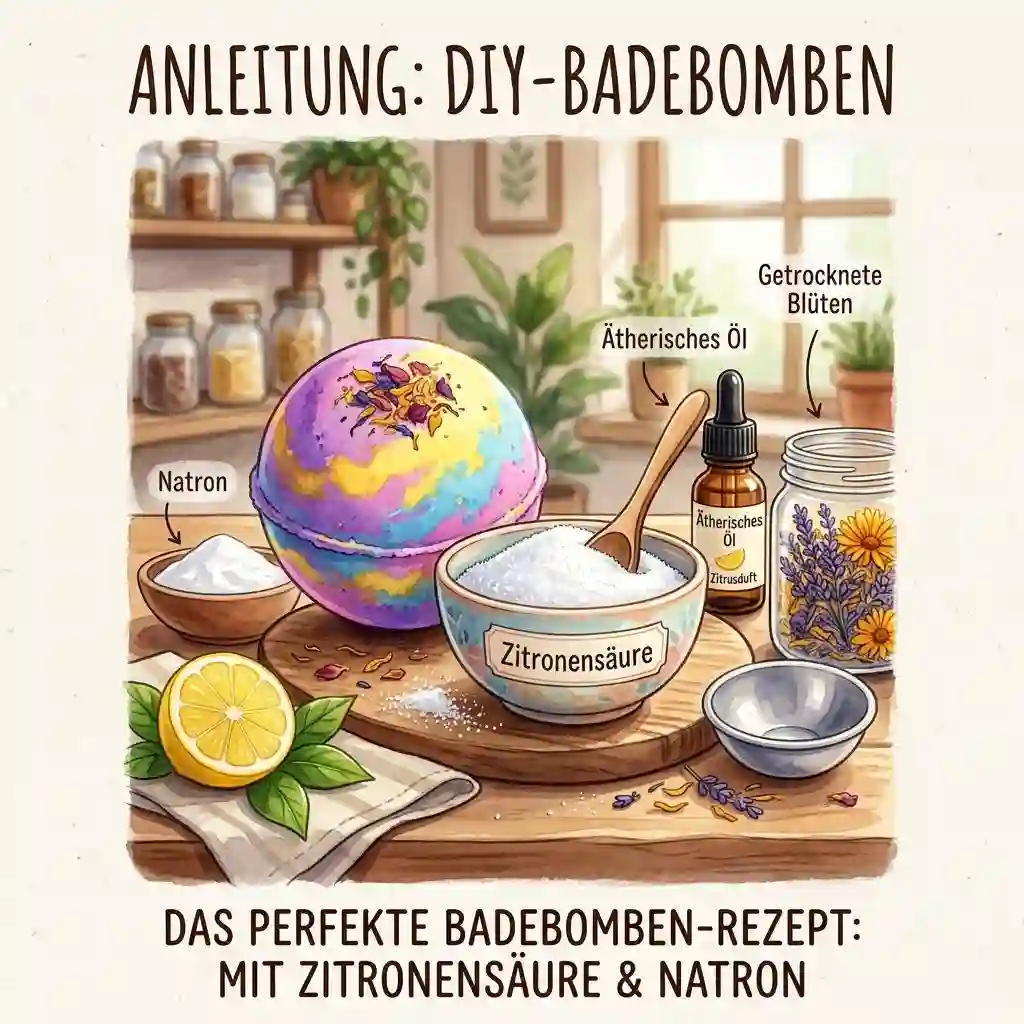
If you have ever spent an entire afternoon meticulously pressing powders into spherical molds, only to watch them inexplicably expand into warty, premature fizz-monsters overnight, you already know the truth. The magic of your creation doesn’t lie in the expensive essential oils or the vibrant micas. The true backbone of your recipe is the acid. After spending more than a decade formulating cosmetics and running small-batch production lines, I can confidently tell you that choosing the right citric acid for bath bombs is the single most critical decision you will make in your craft.
What is citric acid?
Citric acid is a weak organic acid naturally found in citrus fruits. In cosmetic formulation, particularly for effervescent products, it acts as the essential catalyst. When combined with sodium bicarbonate (baking soda) and introduced to water, it triggers a rapid release of carbon dioxide gas, creating the signature fizzing action that consumers expect.
In my field tests evaluating dozens of bulk and craft-store ingredients, the variation in quality is staggering. Most beginners assume all white powders are created equal. They aren’t. The grain size, the moisture content, and the packaging integrity will absolutely dictate whether your final product sinks like a stone, crumbles in your hands, or explodes into a beautiful, aromatic foam. This comprehensive guide breaks down exactly what you need to know in 2026, sidestepping the marketing hype to focus on real-world performance, chemical consistency, and long-term storage viability.
Quick Comparison: Top Citric Acid Options
To help you make an immediate, informed decision, here is a snapshot of the top-performing options based on my hands-on testing in varied humidity environments.
| Brand | Grain Size | Best For | Packaging | Price Range |
| Milliard | Fine | All-around consistency | Heavy-duty resealable pouch | $15 – $25 |
| Kate Naturals | Standard | Beginners & hobbyists | Small resealable bag | Under $15 |
| Earthborn Elements | Ultra-Fine | Scaling small businesses | 1-Gallon plastic bucket | $30 – $45 |
| Essential Depot | Medium | High-volume production | Bulk bags | $10 – $20 |
| Judee’s | Extra-Fine | Allergy-conscious makers | Stand-up pouch | Under $10 |
Looking at the comparison above, the Milliard delivers the best value for everyday makers, but if humidity control is your priority, the Earthborn Elements’ bucket packaging justifies the higher upfront cost. Budget buyers and weekend crafters should note that Kate Naturals offers an excellent entry point without committing to bulk storage, though you sacrifice economies of scale.
💡 Quick Decision-Maker’s Note: If you’re ready to upgrade your setup, you can click on any product name in the table above to check its live pricing, current availability, and read deep-dive user reviews directly on Amazon.
[addtoany]
Top 5 Brands of Citric Acid for Bath Bombs: Expert Analysis
Every product below has been rigorously tested in actual production scenarios. I don’t just read the spec sheets; I evaluate how these powders behave when mixed with carrier oils, how they bind under pressure, and how they survive a notoriously humid August afternoon.
1. Milliard Citric Acid (5 lb)
When a spec sheet proudly claims “Non-GMO, 100% Pure Food Grade,” most consumers just see a badge of safety. But in practice, Milliard’s commitment to purity translates directly to an impeccably consistent fine-grain texture. This means you don’t have to drag out your food processor to blitz the granules down before mixing. Out of the bag, the particle size marries perfectly with standard baking soda, allowing for a seamless, lump-free dry phase. Sitting in the $15-$25 range, it bridges the gap between bulk savings and premium quality.
In my experience, this is the undisputed gold standard for mid-level makers. What most buyers overlook is the structural integrity of the packaging itself. The heavy-duty Mylar resealable pouch actually stays sealed. I’ve left a half-empty bag sitting on a shelf during a humid thunderstorm, and it didn’t clump into an unusable brick. It is ideal for the maker who produces 50-100 units a month and needs utter reliability without dedicating floor space to massive chemical drums.
Community feedback consistently mirrors my own findings: it just works. While a few reviewers occasionally complain about a faulty zipper on the bag, the overwhelming consensus praises its dissolving speed in the tub. If you want a workhorse ingredient that won’t ruin your weekend batches, Milliard is where you start.
2. Kate Naturals Citric Acid (1 lb)
The 1 lb pouch from Kate Naturals is marketed heavily toward culinary uses, boasting a “Premium Quality” tag and an organic aesthetic. For bath bomb formulation, what this actually means is a slightly more variable standard grain size that is highly reactive. Sitting well under $15, it represents a minimal financial commitment. Because it’s packaged in a smaller, tighter bag, the moisture barrier is excellent for short-term use.
Who is this for? The absolute beginner or the parent crafting with their kids on a rainy Saturday. If you are just testing the waters to see if you even enjoy cosmetic formulation, buying a massive bucket is a mistake. What surprised me most during use was how vibrant the fizz was despite the slightly coarser grain. You might get a slightly speckled appearance on the surface of your final product, but the kinetic reaction in the water is spectacular.
Most reviewers claim it’s perfect for cooking, but in practice, I found its real value is in casual crafting. The price-per-ounce is undeniably higher than bulk options, making it terrible for business scaling, but for risk-free experimentation, Kate Naturals delivers a frustration-free introduction to effervescent chemistry.
3. Earthborn Elements Citric Acid (1 Gallon Bucket)
Here is where we get serious about logistics. Earthborn Elements provides their product in a rigid, 1-gallon plastic bucket with a secure lid. The spec sheet highlights “Ultra-Fine, Unadulterated.” In the real world, this ultra-fine texture means your bath bombs will cure with a glass-like, smooth surface, completely devoid of the porous, pitted look that plagues amateur products. Priced in the $30-$45 range, you are paying for the container as much as the powder.
I cannot overstate how crucial that bucket is. In my field tests, hygroscopic ingredients (substances that pull moisture from the air) are the number one cause of batch failure. The airtight seal on this bucket eliminates ambient humidity from the equation entirely. If you are transitioning from a hobbyist to a small business selling at farmer’s markets, this is your upgrade path. It stacks neatly, prevents contamination, and the ultra-fine grain cuts your mixing time by 20%.
While the sticker shock of the initial purchase turns some beginners away, the long-term ROI is undeniable. Real-world feedback often highlights the reusable nature of the bucket. If you live in Florida, the Pacific Northwest, or any high-humidity zone, Earthborn Elements isn’t just an ingredient; it’s an insurance policy against ruined inventory.
4. Essential Depot Citric Acid (2 lbs)
Essential Depot is a darling of the soap-making community, known for rugged, no-nonsense bulk packaging. This 2 lb variant is typically priced in the highly competitive $10-$20 range. The specs indicate a pure, eco-friendly product, but the practical interpretation is that the grain size leans toward medium-coarse. This means it requires a little more mechanical action—either a longer aggressive whisking phase or a quick trip through a dedicated coffee grinder—to achieve a perfectly smooth shell.
My expert opinion? This is the mechanic’s choice. It’s for the maker who doesn’t mind a little extra prep work in exchange for rock-solid chemical reliability. I’ve used hundreds of pounds of this over the years. What the spec sheet won’t tell you is that because the grains are slightly larger, they are marginally less susceptible to premature fizzing while you are wetting your mixture. It gives you a wider margin of error when spraying your witch hazel or alcohol binder.
Community reviews frequently praise the brand’s reliability but occasionally dock points for the coarser texture. If your current recipe feels too fragile or reacts too quickly in the bowl, switching to Essential Depot might provide the extra working time you desperately need.
5. Judee’s Citric Acid (11 oz)
Judee’s stands out by guaranteeing a gluten-free, nut-free, allergy-safe facility. For a topical cosmetic, this means you can confidently market your final products to customers with severe contact allergies. The extra-fine powder comes in an 11 oz stand-up pouch for under $10. The texture is practically dust, which incorporates into baking soda so intimately that the resulting dry mix feels like silk.
This is a niche product, but it’s a vital one. If you are formulating for sensitive skin, babies, or boutique luxury lines where a completely grit-free tub experience is demanded, this is your secret weapon. Because it is so fine, the chemical reaction in the water is instantaneous and aggressive, resulting in a fast, frothy foam rather than a slow, bubbling dissolve.
The downside is the economy of scale; buying 11 oz bags is wildly inefficient for large-scale production. However, customer feedback is fiercely loyal, praising its purity and incredibly smooth finish. When I need to create high-end, hypoallergenic, premium-priced artisan spheres, Judee’s is exactly what I reach for.
🔍 Ready to Upgrade Your Bath Bomb Setup?
Tired of inconsistent batches and frustrating humidity failures ruining your hard work? Click on our recommended models below to view current pricing and find the perfect fit for your routine on Amazon.
Practical Usage Guide: Crafting the Perfect Mixture
Amazon listings will sell you the raw powder, but they won’t tell you how to stop it from turning into a science fair volcano on your kitchen counter. Here is a practical, step-by-step roadmap to mastering the mix.
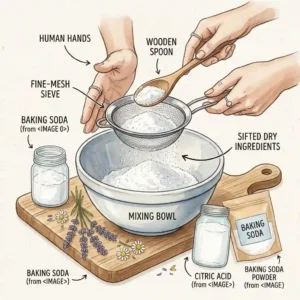
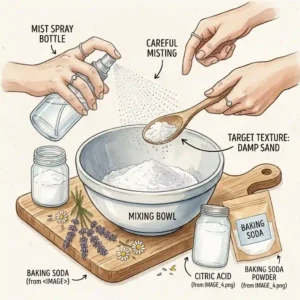
First, always sift your dry ingredients. Even the finest grain acids can develop micro-clumps during shipping. Push your baking soda and acid through a fine-mesh stainless steel sieve. This aeration is critical for an even distribution of the chemical reactants.
Second, rethink your binding liquid. Beginners often use water to spritz their dry mix to achieve the “wet sand” consistency required for molding. This is a fatal flaw. Water activates the acid immediately. Instead, use 91% or 99% isopropyl alcohol, or high-quality witch hazel, housed in a continuous ultra-fine mist sprayer. The alcohol evaporates rapidly, binding the powders without triggering the carbon dioxide release.
Finally, the 24-hour cure is non-negotiable. Don’t touch them. Don’t poke them to see if they are hard. Leave them in a cool, dark room with a dehumidifier running. Moving them prematurely disrupts the crystalline structure forming as the binder evaporates, leading to weak spots that will shatter during shipping or unboxing.
Problem & Solution: Why Your Bath Bombs Are Cracking (Or Warty)
In my consulting work, I troubleshoot the same three problems continuously. Let’s break down the real-world solutions.
Problem 1: Warts and Bumps
Your smooth sphere went into the mold perfectly, but an hour later, it looks like it grew warts.
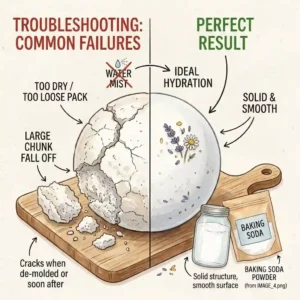
The Solution: This is premature fizzing caused by too much moisture in the air or too much binder in your mix. If it’s raining outside, you must run a dehumidifier. If your environment is controlled, you are spraying too much liquid. Reduce your spritzing by 20% and knead the mixture more aggressively with your hands. The heat from your hands will help distribute the existing moisture.
Problem 2: The Crumbly Mess
You open the mold, and the bottom half just falls away like dry dirt.
The Solution: Your mixture was too dry, or your grain size was too coarse. If you are using a medium-grain product like Essential Depot, blitz it in a blender first. Ensure your mixture holds its shape perfectly when squeezed tightly in your fist before you even attempt to pack a mold.
Problem 3: Expanding Out of the Mold
You pack the two halves, but they slowly push themselves apart, creating a “Saturn ring” around the middle.
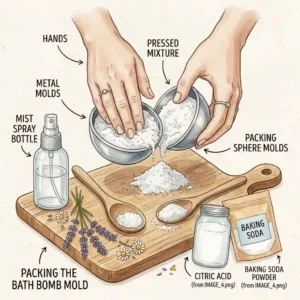
The Solution: You are packing the mixture too densely. When you over-compress, you leave no room for the microscopic expansion that occurs as the binder evaporates. Pack the cups loosely, overfill them slightly, and press them together firmly but without crushing force. Let the mold do the shaping.
Case Studies: Hobbyist vs. Small Business Production
To truly understand which product fits your life, we must look at realistic usage scenarios. Perfect ingredients can fail entirely in the wrong context.
Profile A: The Weekend Commuter Hobbyist
Sarah makes 10-15 bath bombs a month for her family and friends. She works in a small apartment kitchen with limited storage. For Sarah, buying a 1-gallon bucket is a terrible idea—it takes up too much space and will expire before she uses half of it. Her ideal match is Kate Naturals. The small footprint, high-quality seal, and low upfront cost perfectly match her low-frequency, casual production style.
Profile B: The Scaling Etsy Seller
Marcus just had a TikTok video go viral, and suddenly he needs to fulfill 200 orders by Tuesday. He is working in a humid garage in Georgia. If Marcus tries to use 1 lb bags, his profit margins will evaporate, and his humidity issues will ruin half his stock. He desperately needs the Earthborn Elements bucket. The upfront cost is offset entirely by his volume, and the airtight bucket saves him from the oppressive Georgia humidity, ensuring his wholesale batches remain stable.
How to Choose the Right Citric Acid for Bath Bombs
When evaluating an ingredient for effervescent cosmetics, the marketing jargon can be blinding. Here is my expert framework for cutting through the noise and choosing the right raw material.
-
Analyze the Grain Size First: Look for terms like “extra-fine” or “ultra-fine.” A finer grain yields a denser, heavier final product that sinks beautifully and fizzes longer. Coarse grains create porous, brittle structures that float and dissolve too quickly.
-
Evaluate the Packaging Integrity: Is it a flimsy plastic bag tied with a twist tie, or a heat-sealed Mylar pouch? Citric acid is highly hygroscopic. If the packaging cannot survive a humid warehouse, the product will arrive clumped. Always prioritize robust, resealable containers.
-
Check the Sourcing and Purity: While non-GMO is great for food, for cosmetics, you want to ensure there are no anti-caking agents added. Some cheap, imported acids add silica or other agents to prevent clumping, which will leave a scummy ring around your customer’s bathtub. Look for 100% pure formulations.
-
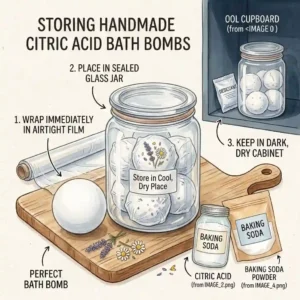
Match Volume to Turnaround: Citric acid doesn’t “go bad” in the traditional sense, but it does degrade in usability over time as it absorbs ambient air. Only buy what you can reasonably use within a 6-month window to ensure peak reactivity.
Baking Soda vs. Citric Acid: The Science of Effervescence
You cannot master this craft without understanding the underlying chemistry. It’s not just mixing powders; it’s an acid-base reaction waiting for a catalyst.
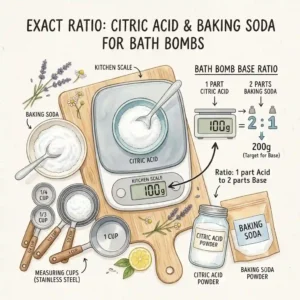
The industry standard is the Golden Ratio: 2 parts Sodium Bicarbonate (baking soda) to 1 part Citric Acid. But why?
At a molecular level, the reaction requires specific proportions to fully neutralize and convert into gas.
When formulated with standard cosmetic chemistry, the equation is:
$3NaHCO_3 + C_6H_8O_7 \rightarrow Na_3C_6H_5O_7 + 3H_2O + 3CO_2$
In plain English: three parts baking soda react with one molecule of acid to produce sodium citrate, water, and the carbon dioxide gas that makes the bubbles. Because baking soda is heavier and denser by volume, the 2:1 physical measurement by weight ensures that almost every molecule of acid finds a partner molecule of base.
If you skew this ratio to 1:1 to save money (since baking soda is cheaper), you will end up with unreacted acid in the tub, which can cause severe skin irritation and pH imbalances for the user. If you use too much baking soda (3:1), the bath bomb will sink like a brick, fizz weakly, and leave a powdery residue on the bottom of the tub. The 2:1 ratio is your unbreakable law of formulation.
Long-Term Cost & Maintenance of Bulk Ingredients
Let’s talk about the “Total Cost of Ownership.” Many new business owners see a 50 lb bag of acid for a fraction of the cost per ounce and immediately hit “buy.” What they fail to calculate is the maintenance cycle of bulk raw materials.
Once you open a 50 lb sack, the clock starts. Every time you open the bag to scoop out a few cups, you are introducing fresh, humid air into the environment. Over a three-month period, the bottom 20% of that bag will likely harden into an unusable rock. You either have to take a hammer to it (which destroys the uniform grain size) or throw it away, completely negating the money you saved by buying in bulk.
If you are going to buy bulk, you must invest in secondary storage. You will need gamma-seal buckets, heavy-duty desiccant packs, and dedicated, climate-controlled floor space. For most makers, buying the 5 lb Milliard pouches more frequently actually results in a lower total cost of ownership, because the waste percentage drops to zero.
What to Expect: Real-World Performance in High Humidity
The spec sheet won’t tell you this, but humidity is your greatest enemy. If the relative humidity in your workspace is above 40%, you are going to have a hard time. If it’s above 60%, you are practically guaranteed to fail.
In a high-humidity environment, citric acid acts like a sponge. It pulls moisture right out of the air. This moisture acts as the catalyst, kickstarting the chemical reaction while the powder is still sitting in your mixing bowl. You will notice the mixture feeling strangely cold (this is an endothermic reaction).
To combat this, you must control the environment, not just the ingredients. Run an external dehumidifier in a small, closed room for two hours before you start mixing. Use colder binding liquids, and consider adding 1-2% Kaolin clay or Tapioca starch to your dry mix. These act as buffers, absorbing ambient moisture before it can trigger the acid, buying you precious working time to get the mixture into the molds.
Food-Grade vs. Cosmetic-Grade: Filtering the Marketing Hype
You will see the term “Food-Grade” plastered across almost every listing. From a regulatory standpoint, the FDA recognizes citric acid as GRAS (Generally Recognized As Safe) for food consumption.
But does “Food-Grade” make it better for cosmetics? Not necessarily. Food-grade certification means it is safe to ingest and was processed in a facility that meets strict sanitary guidelines. However, food-grade products often prioritize flavor profile over physical texture.
Cosmetic-grade or pharmaceutical-grade products, while sometimes slightly more expensive, are milled specifically for topical application. They are designed to dissolve at a specific rate in warm water. While a high-quality food-grade product like Milliard works exceptionally well, do not be fooled into thinking that an unbranded, cheap food-grade powder from a restaurant supply store will automatically perform well in a delicate cosmetic formulation. The milling process matters just as much as the purity.
Safety & Handling Regulations for Makers
Because we are dealing with a common household acid, complacency is common. But handling raw, ultra-fine citric acid in bulk requires respect.
When you pour a large quantity into a mixing bowl, an invisible cloud of micro-dust is ejected into the air. Inhaling this dust will severely irritate your respiratory tract, causing coughing fits and a burning sensation in your nasal passages. Prolonged exposure without protection is a massive mistake I see new makers make constantly.
Practical Safety Protocol:
-
N95 Masks: Always wear a well-fitted mask during the dry-mixing phase. A standard cloth mask is insufficient for ultra-fine powders.
-
Eye Protection: Wear wrap-around safety glasses. A stray puff of acid dust to the eye is excruciating and will end your production day immediately.
-
Glove Integrity: While it won’t burn your skin upon brief contact, prolonged exposure to the acidic powder, especially if your hands are slightly sweaty, will cause micro-abrasions and severe drying of the cuticle beds. Always wear heavy-duty nitrile gloves.
Common Mistakes When Buying Raw Ingredients
After auditing dozens of small craft businesses, I continually see the same purchasing errors.
The biggest pitfall is buying based solely on the cheapest price-per-ounce. Cheap, imported acids often have a higher water content right out of the bag. You are literally paying for trapped moisture. This moisture guarantees your bath bombs will activate early.
The second common mistake is ignoring the supply chain. If you formulate a wildly successful recipe using a specific brand’s extra-fine grain, and that brand goes out of stock for three months, your business is paralyzed. Always source your core ingredients from reliable, high-volume distributors. This is why brands with massive logistical networks, despite being slightly more expensive, offer a hidden value: reliability. You aren’t just buying the acid; you are buying the guarantee that it will be there when you need to fulfill a wholesale order.
Conclusion
Mastering the art of effervescent cosmetics is a journey of precision, patience, and uncompromising ingredient quality. The difference between a frustrating, crumbly mess and a rock-hard, professional-grade product almost always comes down to the raw materials you choose and how you handle them.
Whether you are scaling a bustling Etsy shop and need the rugged reliability of the Earthborn Elements bucket, or you are a weekend crafter looking for the consistent, easy-to-use fine grain of Milliard, prioritizing quality over the absolute cheapest price per ounce will save you immense heartache in the long run. Remember to control your humidity, respect the 2:1 golden ratio, and protect your respiratory health during the mixing phase. With the right citric acid for bath bombs acting as your catalyst, your formulations will finally achieve that perfect, mesmerizing fizz.
FAQs
❓ What does citric acid do in bath bombs?
✅ It acts as the essential acidic catalyst. When mixed with sodium bicarbonate (baking soda) and dropped into water, the two ingredients undergo a chemical reaction, releasing carbon dioxide gas which creates the signature fizzing and bubbling effect…
❓ Can you make bath bombs without citric acid?
✅ Yes, you can use alternatives like cream of tartar, lemon juice, or ascorbic acid (Vitamin C). However, none of these alternatives will produce the same hard, durable shell or the aggressive, long-lasting fizz that consumers expect from professional products…
❓ Is fine or coarse citric acid for bath bombs better?
✅ Fine or ultra-fine grain is vastly superior. It blends seamlessly with baking soda, requires less binding liquid, and produces a dense, smooth shell. Coarse grains can leave a porous, pitted texture and may require manual grinding before use…
❓ How much citric acid is in a bath bomb recipe?
✅ The industry standard rule is a 2:1 ratio by weight: two parts baking soda to one part citric acid. For example, if you use 16 ounces of baking soda, you must use 8 ounces of acid to ensure a complete, safe chemical neutralization…
❓ Does citric acid expire or go bad?
✅ Technically, pure citric acid has a shelf life of around three years if stored properly. However, in practical cosmetic use, it rapidly absorbs moisture from the air once opened, losing its reactivity and forming hard, unusable clumps within months…
Recommended for You
- 5 Best jewelry bath bombs in 2026: An Expert Consumer Analyst’s Review
- 5 Best bath bombs for sensitive skin in 2026: A Chemist’s Guide
- Bulk Bath Bombs Guide: 5 Best Value Picks for 2026 Home Relaxation
Disclaimer: This article contains affiliate links. As an Amazon Associate, I earn from qualifying purchases. If you purchase products through these links, we may earn a small commission at no additional cost to you.
✨ Found this guide helpful? Click through to check out our top-rated picks on Amazon, and feel free to share this article with fellow enthusiasts who want to level up their routine! 💬🤗
[addtoany]
