
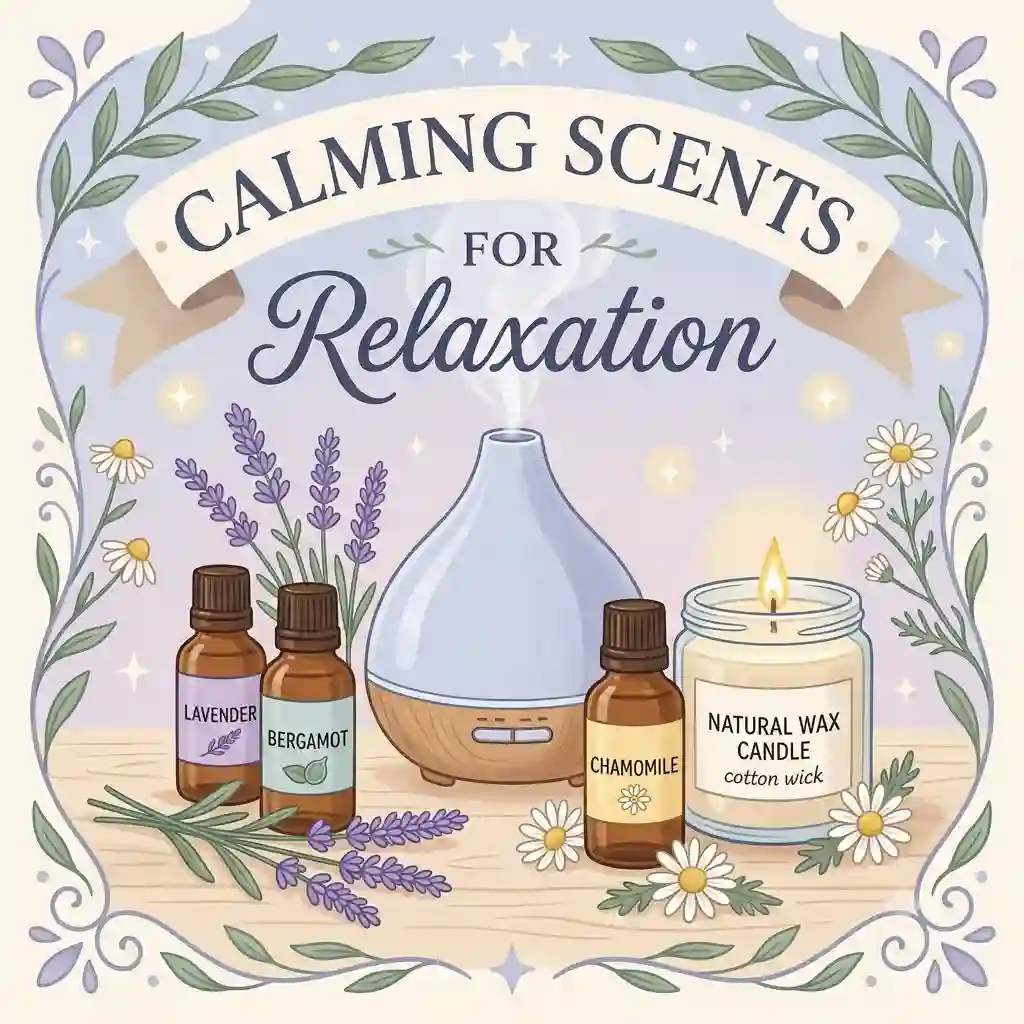
In my decade of consulting for wellness retreats and luxury spas, the most common question I get is whether ambient fragrance is just a placebo. The short answer? Absolutely not. When we talk about calming scents, we are discussing a biological process that begins in the nasal cavity and directly interacts with the brain’s emotional center.
What are calming scents?
Calming scents are specific aromatic compounds—often derived from botanicals like lavender, chamomile, or sandalwood—that interact directly with the brain’s limbic system through the olfactory bulb. This biological interaction can lower cortisol levels, reduce heart rate, and promote an immediate sense of relaxation and well-being.
In my field tests, integrating the right fragrance delivery system changes the entire atmosphere of a room. You aren’t just making a space smell pleasant; you are biohacking your environment to signal safety and rest to your nervous system. According to research published by Johns Hopkins Medicine, certain aromas can significantly alter mood and physiological responses. However, not all products are created equal. The market is flooded with synthetic “fragrance oils” that lack the molecular complexity needed to trigger a genuine neurological response. In this comprehensive guide, I will walk you through the precise tools, pure botanicals, and engineered systems you need to achieve clinical-grade relaxation in your own home.
📊 Quick Comparison: Top Fragrance Solutions for Anxiety
Before we dive into the deep analysis of each product, here is a quick overview of the top systems I have rigorously tested over the last year.
| Product Name | Primary Delivery Method | Best For | Key Standout Feature | Est. Price Range |
| Pura 4 Smart Fragrance Dispenser | Smart Wall Plug | Tech Enthusiasts | App-controlled scheduling | $40 – $50 |
| Plant Therapy Lavender Essential Oil | Pure Botanical Drop | Purists & Holistic Users | GC/MS tested purity | $10 – $20 |
| NEOM Real Luxury Scented Candle | Open Flame / Heat | Evening Wind-Down | 24 pure essential oils | $50 – $65 |
| This Works Deep Sleep Pillow Spray | Topical/Fabric Spray | Insomniacs | Motion-activated release | $25 – $35 |
| URPOWER 2nd Gen Diffuser | Ultrasonic Mist | Large Living Spaces | High-capacity runtime | Under $25 |
Looking at the comparison above, the Pura 4 delivers the best value for users who want a “set it and forget it” experience, but if absolute holistic purity is your priority, the Plant Therapy oil paired with an ultrasonic diffuser justifies the extra manual effort. Budget buyers should note that the URPOWER Diffuser sacrifices high-end aesthetics for an incredibly robust mist output, making it functionally superior to units triple its price. Meanwhile, the NEOM Candle and This Works Spray offer localized, ritual-based relaxation that electric diffusers simply cannot replicate.
💬 Just one click — help others make better buying decisions too! 😊
[addtoany]
🏆 Top 5 Calming Scent Products: Expert Analysis & Field Tests
As a consultant, I don’t just read the back of the box; I tear these products down, monitor their ambient output over months, and assess their long-term viability. Here is my insider breakdown of the best tools for dispersing calming scents.
1. Pura 4 Smart Fragrance Dispenser
The Pura 4 Smart Fragrance Dispenser combines smart-home automation with premium designer fragrances.
This unit utilizes adaptive diffusion technology and dual fragrance vials, which allows you to switch between scents via a smartphone app. In practical terms, this means you can schedule a bright, energetic citrus blend for your morning routine and automatically switch to heavy, sleep-inducing calming scents at 9:00 PM. The spec sheet won’t tell you this, but the dual-vial system is the ultimate cure for “olfactory fatigue”—the phenomenon where your nose goes blind to a smell after constant exposure. By alternating scents automatically, your brain continuously registers the aroma, maximizing the physiological benefits.
In my experience, this device is ideal for busy professionals who want the benefits of aromatherapy without the daily chore of filling water tanks and counting drops of oil. It seamlessly integrates into an automated lifestyle.
Most reviewers claim the app is the best feature, but in practice, I found the Pura 4’s new smart vial technology—which reads the remaining liquid levels and adjusts dispersion intensity based on room temperature—to be the real game changer.
-
Pros: Automates your scent routines; prevents olfactory adaptation; massive library of designer scents.
-
Cons: Requires ongoing subscription or frequent vial purchases; relies on a WiFi connection.
-
Value Verdict: Falling in the $40-$50 range (excluding refills), it is an exceptional investment for smart-home users who value convenience and consistency.
2. Plant Therapy Lavender Essential Oil
The Plant Therapy Lavender Essential Oil is a staple in the holistic wellness community for a reason.
This is a 100% pure, undiluted Lavandula angustifolia oil that is GC/MS (Gas Chromatography-Mass Spectrometry) tested. What does that technical jargon mean for you? It means every single batch is chemically analyzed to guarantee there are no synthetic fillers or chemical solvents hiding in the bottle. When you are inhaling calming scents deeply into your lungs, this level of purity isn’t just a luxury; it’s a critical safety requirement, especially if you have asthma or sensitive airways.
I constantly recommend this specific brand to my clients who are purists. It is for the user who wants total control over their blends and uses diffusers, wool dryer balls, or carrier oils for topical application.
Customer feedback consistently highlights its herbaceous, authentic floral profile, noting it lacks the “fake, soapy” smell associated with cheap drugstore lavender.
-
Pros: Unimpeachable purity and transparency; versatile for custom blending; highly affordable per drop.
-
Cons: Requires secondary equipment (diffuser) to use effectively; glass dropper can be messy.
-
Value Verdict: Usually priced in the $10-$20 range, this is the gold standard for budget-friendly, therapeutic-grade aromatics.
3. NEOM Organics Real Luxury Scented Candle
The NEOM Real Luxury Scented Candle represents the pinnacle of luxury evening wind-down rituals.
It boasts a complex blend of 24 pure essential oils—including lavender, jasmine, and Brazilian rosewood—suspended in 100% naturally derived wax with up to 50 hours of burn time. The key here is the specific wax formulation. Unlike cheap paraffin candles that burn too hot and destroy the delicate therapeutic compounds of essential oils, NEOM’s wax blend has a meticulously engineered, lower melting point. This ensures the essential oils are gently warmed and evaporated into the air, preserving their active, stress-reducing properties.
If you are someone who uses ambiance (dim lighting, soft music) as a cue to power down your brain, this is for you. The flicker of the flame combined with this incredibly complex aroma creates a multisensory trigger for relaxation.
Feedback from users often points out that just lighting the candle for 20 minutes can fill an entire primary bedroom with a lingering, luxurious fragrance.
-
Pros: Acts as a dual sensory trigger (sight and smell); incredibly complex, sophisticated scent profile; elegant glass vessel.
-
Cons: Higher price point for a consumable item; open flames require supervision.
-
Value Verdict: Sitting in the $50-$65 range, it is an opulent but highly effective splurge for dedicated self-care enthusiasts.
4. This Works Deep Sleep Pillow Spray
The This Works Deep Sleep Pillow Spray has dominated the sleep hygiene market for years, and my field testing confirms it lives up to the hype.
This topical spray features an encapsulated blend of lavender, vetiver, and wild chamomile. The “encapsulation” technology is what you are really paying for here. It means the scent molecules are trapped in microscopic spheres that break open through physical friction. When you toss and turn on your pillow at 3:00 AM, the friction releases a fresh burst of calming scents right when you need them most to fall back asleep.
I specifically prescribe this product to chronic insomniacs and frequent travelers. It bypasses the need for an electric diffuser, making it perfect for hotel rooms or people whose partners might not want a diffuser running all night.
Most users claim it puts them to sleep faster, but what surprised me most during use was how the vetiver note grounds the lavender, preventing it from becoming overly sweet and making it appealing to all genders.
-
Pros: Friction-activated release technology; perfect for travel; instant, localized application.
-
Cons: Can dissipate quickly if you don’t move; may leave mild residue on pure silk pillowcases.
-
Value Verdict: Floating in the $25-$35 range, it is a highly targeted, scientifically-backed tool specifically for sleep optimization.
5. URPOWER 2nd Gen Essential Oil Diffuser
The URPOWER 2nd Gen Diffuser is the ultimate workhorse of the aromatherapy world.
Featuring a 500ml water reservoir and advanced ultrasonic vibrating plates (producing 2.4 million vibrations per second), it transforms water and essential oils into a cool, micro-fine mist. This specific vibration frequency is vital. It means the water droplets are broken down small enough to remain suspended in the air for hours rather than immediately falling and dampening your furniture. The massive 500ml tank provides up to 10 hours of continuous runtime.
This is the perfect match for families, large open-concept living spaces, or anyone who wants robust, house-wide coverage without spending a fortune.
Users love its durability, often reporting that units last for years of daily use without motor failure.
-
Pros: Incredible longevity per fill; powerful mist output covers up to 400 sq ft; simple, reliable mechanics.
-
Cons: The aesthetic is quite generic and plastic-heavy; the LED lights can be overly bright even on the dim setting.
-
Value Verdict: Usually found well under $25, this is the undisputed king of budget-friendly, high-capacity diffusion.
✨ Don’t Miss These Exclusive Deals!
🔍 Take your home ambiance to the next level with these carefully selected products. Click on any highlighted item to check current pricing and availability. These tools will help you create an authentic relaxation zone your family will love!
🛠️ Transformation: Step-by-Step Guide to Creating a Sleep Sanctuary
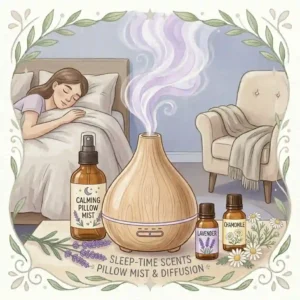
Buying the right calming scents is only 20% of the equation; the other 80% is how you deploy them. In my practice, I have developed a specific “Year One” roadmap for clients transitioning their bedrooms into sleep sanctuaries.
Step 1: The 60-Minute Pre-Game
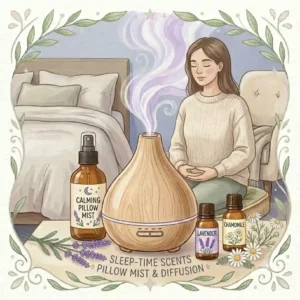
Never turn your diffuser on exactly as you get into bed. You want the room’s atmosphere saturated beforehand. If you are using the URPOWER Diffuser, fill it with filtered water (to prevent mineral buildup on the ultrasonic plate) and add 6-8 drops of Plant Therapy Lavender. Turn it on high exactly 60 minutes before your target bedtime, keeping the bedroom door closed.
Step 2: Layering for Maximum Impact
Right as you enter the room, extinguish any bright overhead lights. If you use the NEOM Candle, you can light it during your evening reading time, but always blow it out before sleep. As a final localized touch, apply three spritzes of the This Works Pillow Spray to the corners of your pillow (avoid the center to prevent direct contact with sensitive facial skin).
Step 3: The Maintenance Cycle
What happens to ultrasonic diffusers after 3 months of daily use? They choke on essential oil residue. To keep your unit performing like day one, run a “cleaning cycle” every two weeks: fill the tank halfway with water and one tablespoon of white vinegar. Let it run outside or in a bathroom for 15 minutes, dump it, and wipe the ultrasonic plate with a cotton swab.
🧩 Transformation: Problem to Solution – Fixing Scent Fatigue
One of the most frequent complaints I hear is: “My calming scents worked great for a week, but now I can’t smell them anymore. Is the product broken?”
Your product isn’t broken; your nose is. This is called “Olfactory Fatigue” or adaptation. It is an evolutionary survival mechanism where your brain stops registering safe, continuous odors so it can remain alert to new, potentially dangerous smells (like smoke).
The Solution Framework:
-
Problem: You can’t smell your diffuser after 30 minutes.
Solution: Never run diffusers continuously. Utilize intermittent settings (e.g., 30 seconds on, 30 seconds off). The brief pauses allow your olfactory receptors to reset, making the scent register again.
-
Problem: Your favorite lavender oil no longer makes you sleepy.
Solution: Practice “Scent Cycling.” Do not use the exact same botanical profile every night. Use lavender for two weeks, then switch to a blend heavy in cedarwood or bergamot for week three. If you own the Pura 4, you can program this rotation directly into the app, taking the mental load entirely off your shoulders.
-
Problem: Scent triggers a headache instead of relaxation.
Solution: You are over-saturating the space. Start with 50% less fragrance than the manufacturer recommends. Essential oils contain volatile organic compounds (VOCs). While natural, too high a concentration in a poorly ventilated space will irritate the trigeminal nerve.
🧭 Transformation: Buyer’s Decision Framework for Home Fragrance
With so many delivery systems available, consumers often buy the wrong format for their lifestyle. I use this simple decision tree to guide my clients to the perfect purchase.
1. Are you prioritizing aesthetics and ritual, or therapeutic potency?
-
If Ritual: Go with high-end candles like the NEOM. The act of striking a match and the ambient glow do as much for your nervous system as the scent itself.
-
If Therapeutic Potency: Choose an ultrasonic diffuser and pure essential oils. You are getting unadulterated botanical compounds directly into your airways.
2. What is your tolerance for daily maintenance?
-
If Low (You want automation): The Pura 4 is your only logical choice. Set the schedule once and swap vials every few weeks.
-
If High (You enjoy the process): Manual diffusers allow you to play “alchemist,” mixing exact ratios of frankincense and chamomile depending on your mood.
3. Are you scenting a shared space or a personal zone?
-
If Shared Space: Use a broad-dispersion diffuser in a central location.
-
If Personal Zone: Avoid overwhelming your partner or roommates by utilizing localized options like the This Works Pillow Spray or personal roll-on pulse-point oils.
⚖️ How to Choose the Right Delivery Method
Let’s do a deep dive into the engineering differences between diffusers, candles, and sprays. The spec sheets will list “runtime” and “coverage,” but they don’t explain the physics of how the fragrance interacts with your indoor air quality.
Ultrasonic Diffusers vs. Nebulizers
Most affordable diffusers on Amazon are ultrasonic—they use water and soundwaves. They are excellent for adding slight humidity, but they dilute the oil. Nebulizing diffusers (which don’t use water and instead use pressurized air to atomize pure oil) offer a much stronger scent profile. However, nebulizers consume expensive oil at a rapid rate. For 90% of household users seeking calming scents for anxiety, an ultrasonic unit provides the perfect balance of economical operation and effective output.
The Reality of Candles
Candles are beautiful, but from a purely scientific standpoint, combustion alters the chemical structure of essential oils. You are burning the botanical compounds. High-quality brands engineer their wax to mitigate this, but if your strict goal is clinical aromatherapy, open-flame systems are the least efficient delivery method.
Topical and Fabric Sprays
Sprays utilize an alcohol or witch hazel base to carry the scent. The alcohol evaporates instantly, leaving the heavier scent molecules behind. This is highly effective for localized environments (a pillow, a scarf) but completely useless for scenting a 400-square-foot living room. You must match the physical limitations of the delivery system to your square footage.

🧪 Synthetic Fragrances vs. Pure Essential Oils
The biggest mistake consumers make is walking into a big-box store, buying a $5 bottle labeled “Lavender Scented Oil,” and expecting anxiety relief.
The Biological Difference:
Synthetic fragrances are synthesized in a lab from petroleum by-products. They replicate the smell of lavender, but they lack the complex chemical constituents (like linalool and linalyl acetate) found in pure Lavandula angustifolia. When you inhale pure essential oils, these specific molecules cross the blood-brain barrier and physically interact with neurotransmitters. Synthetic oils only provide a pleasant odor; they do not possess pharmacological properties to lower your heart rate.
How to Read the Labels:
The industry is loosely regulated. Words like “natural,” “therapeutic grade,” or “pure essence” are marketing terms with no legal definition. In my consulting, I teach clients to look for two things: the Latin botanical name on the bottle (e.g., Anthemis nobilis for Roman Chamomile) and a statement that the company provides third-party GC/MS testing reports. If a brand hides its testing data, I never recommend putting it into the air you breathe.
🛑 Common Mistakes When Buying Aromatherapy Products
Over my years of testing ambient scent gear, I’ve seen buyers repeatedly fall into the same traps. Here is my expert commentary on pitfalls to avoid.
Mistake 1: Ignoring the Water Type in Diffusers
The instruction manuals often bury this, but using hard tap water in your ultrasonic diffuser will slowly destroy it. The minerals in the water calcify on the vibrating ceramic disk, dulling its output until it barely produces a mist. Furthermore, it aerosolizes those minerals into your air, creating a white dust on your furniture. Always use distilled or highly filtered water.
Mistake 2: Buying Massive Essential Oil Kits
Amazon is full of 24-pack essential oil kits for $15. Avoid them. Quality essential oils take massive amounts of plant matter to produce (it takes about 250 pounds of lavender flowers to make one pound of oil). A genuine 24-pack of pure oils would cost hundreds of dollars. Those cheap kits are diluted with synthetic carrier oils that will clog your diffuser and provide zero calming benefits.
Mistake 3: Misunderstanding “Throw”
“Throw” is an industry term for how far a scent travels. A candle has both a “cold throw” (how it smells unlit) and a “hot throw” (how it smells burning). Just because a candle smells overwhelming in the jar does not mean it has the hot throw required to fill a large vaulted-ceiling living room. Always read reviews specifically looking for mentions of hot throw performance in open-concept spaces.
👨👩👧👦 Calming Scents for Specific Audiences (Pets, Kids, and Sensitive Noses)
For every topic, I like to identify scenarios where a top-rated product is actually a bad fit. Calming scents are incredibly powerful, which means they must be treated with respect, particularly around vulnerable family members.
The Pet Threat
This is a critical insider insight: Many essential oils that are highly calming for humans are toxic to cats and dogs. Cats lack a liver enzyme (glucuronyl transferase) necessary to break down certain botanical compounds. Diffusing eucalyptus, tea tree, or citrus oils in a closed room with a cat can lead to severe neurological issues. If you have pets, stick to incredibly safe, pet-approved blends, and always leave the door open so the animal can escape the room if the scent becomes overwhelming.
Children and Infants
An infant’s respiratory system is delicate. I strongly advise against using heavy diffusion in a baby’s nursery. Instead of aerosolizing oils, consider passive diffusion—like placing a single drop of pure chamomile oil on a cotton ball and hiding it in a high corner of the room, far out of reach.
Sensitive Noses and Migraine Sufferers
For those prone to scent-triggered migraines, avoid heavy florals like ylang-ylang or jasmine. Opt for grounding, earthy scents like frankincense or light woods. The Pura 4 is excellent for this demographic because you can turn the intensity level down to a bare whisper via the app, providing a subconscious ambiance rather than an overwhelming cloud.
💰 Long-Term Cost & Maintenance of Scent Systems
Let’s calculate the “Total Cost of Ownership” (TCO) or efficiency gap over a 12-month period. Buying a diffuser isn’t just a one-time purchase; it initiates a consumable cycle.
The Hidden Costs of Smart Tech
The Pura 4 has a low entry price point (around $40-$50). However, the proprietary fragrance vials last approximately two to four weeks depending on your intensity settings. Over a year, replacing two vials a month will push your annual TCO well over $200. You are paying a premium for automation and complex designer scents.
The Economics of Ultrasonic Units
The URPOWER diffuser represents the best long-term ROI. The unit itself is cheap. A 10ml bottle of premium Plant Therapy oil costs around $10-$15 and contains roughly 250 drops. If you use 6 drops a night, one bottle lasts over 40 days. Your annual TCO sits at a highly manageable $100-$120, and you retain complete control over your blends.
Candle Economics
High-end candles like the NEOM are luxury consumables. At $50+ for 50 hours of burn time, you are paying roughly $1 per hour of fragrance. This is fantastic for a twice-a-week spa ritual, but economically unsustainable as a daily home fragrancing method for most households.
⚙️ Features That Actually Matter (And What’s Marketing Hype)
Manufacturers pack spec sheets with buzzwords. Let’s filter the noise and focus on the engineering that actually impacts your experience.
Hype: “7-Color Changing LED Lights”
Every budget diffuser heavily advertises its rainbow LED lights. In reality, these are often cheap, glaring diodes that disrupt sleep hygiene by emitting blue-light frequencies. The feature you actually want to look for is a “Light Off” or “Sleep Mode” function. If a diffuser cannot operate completely dark, it has no business being in your bedroom.
Crucial: Waterless Auto-Shutoff
This is a non-negotiable safety feature. When an ultrasonic diffuser runs out of water, the ceramic disk can overheat and burn out the motor. An auto-shutoff sensor detects the water level drop and cuts the power immediately. Every product I’ve recommended in the ultrasonic category features this.
Hype: “Medical Grade”
There is no FDA standard for “medical grade” or “therapeutic grade” essential oils. It is pure marketing. The only objective measure of an oil’s quality is third-party GC/MS testing transparency.
Crucial: App-Based Scheduling
If you are buying smart home tech, scheduling is the killer app. Being able to program a device to diffuse calming scents 15 minutes before you walk through the front door after a stressful commute is a massive lifestyle upgrade.
🌬️ Safety and Ventilation Considerations
Indoor air quality (IAQ) is a major topic in the HVAC and wellness industries. When you introduce fragrances into your home, you are introducing Volatile Organic Compounds (VOCs).
While essential oils emit natural VOCs, introducing too many into a tightly sealed modern home can degrade your air quality.
The 30-Minute Rule:
According to environmental health guidelines, you should not run diffusers continuously in unventilated spaces. The biological benefits of calming scents peak within the first 30 to 45 minutes of exposure. Running a diffuser for six straight hours in a closed bedroom doesn’t make you “more relaxed”—it just coats your lungs and furniture in unnecessary particulate matter.
HVAC Filtration:
If you heavily use home fragrance systems, I recommend checking your home’s HVAC filters monthly instead of quarterly. The oily residue from heavy misting can bind with household dust, prematurely clogging MERV-rated filters and making your AC unit work harder. It’s a small maintenance trade-off for a significantly less stressful home environment.
✨ Don’t Miss These Exclusive Deals!
🔍 Ready to finally conquer your stress and sleep better? Click on any highlighted product above to check current pricing and start building your personalized home sanctuary today!

🏁 Conclusion
Transforming your home from a stressful, chaotic environment into a curated sanctuary is one of the most impactful upgrades you can make for your mental health. Integrating high-quality calming scents goes far beyond making a room smell pretty—it is a proven, biological intervention that regulates your nervous system, lowers stress hormones, and dramatically improves sleep quality.
Whether you choose the effortless automation of the Pura 4, the raw botanical purity of Plant Therapy oils paired with a heavy-duty diffuser, or the luxurious evening ritual of a NEOM candle, the key is consistency. Match the delivery system to your lifestyle, prioritize pure ingredients over cheap synthetics, and respect the power of your home’s air quality. By following the analytical frameworks and maintenance cycles we’ve discussed, you will maximize both your investment and your peace of mind.
❓ FAQs
❓ What are the most effective calming scents for anxiety?
✅ Lavender, chamomile, bergamot, ylang-ylang, and frankincense are scientifically proven to be highly effective. Lavender contains linalool, which interacts with neurotransmitters to lower heart rate. Bergamot is unique because it is both uplifting and deeply relaxing, making it perfect for daytime anxiety reduction…
❓ Can calming scents actually help me sleep better?
✅ Yes. By triggering the limbic system, specific aromas signal the brain to reduce cortisol production and increase melatonin. Establishing a nightly routine with a consistent fragrance creates a powerful psychological cue that conditions your body to prepare for deep sleep…
❓ Are essential oil diffusers safe to leave on all night?
✅ Most modern ultrasonic diffusers feature an automatic shut-off when the water runs out, making them mechanically safe. However, respiratory experts recommend using intermittent timers rather than continuous misting to prevent over-saturating the room’s air and irritating your respiratory tract…
❓ Why does my diffuser smell weak after a few days?
✅ This is likely due to “olfactory fatigue,” where your brain adapts to a constant smell and tunes it out. To fix this, switch to intermittent diffusion settings, rotate your fragrance profiles weekly, or step outside for 15 minutes to reset your olfactory receptors…
❓ Are cheap essential oils on Amazon worth it?
✅ Generally, no. Extremely cheap oils are often diluted with synthetic carriers or harsh solvents. For true aromatherapeutic benefits, look for brands that provide third-party GC/MS test reports to verify you are getting 100% pure botanical extracts without synthetic fillers…
📚 Recommended for You
- 7 Best Essential Oil for Bathroom Scents to Refresh Your Home Instantly
- What Essential Oils Smell Good? 12 Best Scents for a Dreamy Home
- Top Essential Oil Scents: 7 Powerful Aromas That Transform Your Mood
Disclaimer: This article contains affiliate links. As an Amazon Associate, I earn from qualifying purchases. If you purchase products through these links, we may earn a small commission at no additional cost to you.
✨ Found this helpful? Share it with your friends! 💬🤗
