
For over a decade in the sleep hygiene and environmental wellness consulting space, I’ve tested hundreds of bedroom optimizations. What is a lavender sleep spray exactly? At its core, it is a specialized aromatic mist formulated with Lavandula angustifolia extracts, designed to be dispersed over bedding to induce parasympathetic nervous system activation. But the reality is far more nuanced.
A high-quality lavender sleep spray doesn’t just make your room smell pleasant; it utilizes volatile organic compounds—specifically linalool and linalyl acetate—to interact directly with your olfactory bulb. This cranial nerve projects straight to the amygdala and hippocampus, regions of the brain that govern emotion and memory, effectively bypassing the conscious mind to lower your heart rate and signal your body that it is time to sleep. According to research published on the National Institutes of Health (NIH), these compounds have a measurable physiological effect on the central nervous system.
However, after years of field testing, what most buyers overlook is the delivery mechanism. A poor formulation will evaporate in five minutes, while a masterfully blended spray uses heavier carrier oils or complementary base notes like vetiver to anchor the scent for hours. In this guide, I will break down exactly which products deliver genuine biochemical results, and which ones are just glorified water, helping you make a truly informed investment in your nightly recovery.
Quick Comparison Table & Core Analysis
| Brand / Model | Scent Profile | Carrier Type | Best For | Price Range |
| This Works Deep Sleep | Lavender, Vetiver, Camomile | Water/Alcohol | Deep relaxation & longevity | Premium ($25-$35) |
| Asutra Lavender & Chamomile | Pure Lavender & Chamomile | Jojoba Oil | Dry climates & sensitive skin | Mid-Range ($15-$20) |
| Bath & Body Works Sleep | Lavender & Vanilla | Synthetic Blend | Budget-conscious buyers | Budget (Under $15) |
| Dr Teal’s Sleep Spray | Lavender & Epsom | Water/Castor Oil | Nightly ritual building | Budget (Under $10) |
| OSEA Vagus Nerve Spray | Lavender, Citrus, Juniper | Meadowfoam Oil | High-stress professionals | Luxury ($40-$50) |
Looking at the comparison above, the This Works formula delivers the absolute best value in the premium tier, primarily because its inclusion of vetiver anchors the scent, extending its half-life far beyond what the budget models offer. Budget buyers should note that while the Bath & Body Works and Dr Teal’s options sacrifice therapeutic-grade purity for lower price points, their heavier atomization makes them highly effective for psychological conditioning. If ambient humidity in your bedroom is low, the Asutra mist’s jojoba carrier oil justifies its mid-range price by physically preventing the lavender notes from evaporating too quickly in dry air.
💬 Just one click — help others make better buying decisions too! 😊
[addtoany]

Top 5 Lavender Sleep Sprays: My Expert Analysis
1. This Works Deep Sleep Pillow Spray
The This Works Deep Sleep Pillow Spray features a proprietary, therapeutically dosed blend of lavender, wild chamomile, and vetiver that has become a cult standard for a reason. Featuring a fine-mist mechanical atomizer and a 75ml capacity, it boasts a clinically-backed essential oil suspension. What this means in practice is that the vetiver acts as an aromatic “fixative”—anchoring the highly volatile lavender molecules so the scent lasts up to 8 hours on your pillow, rather than dissipating before you even fall asleep.
In my years of field tests, this is the gold standard for chronic insomnia sufferers who need prolonged olfactory stimulation. The spec sheet won’t tell you this, but the alcohol-to-water ratio is perfectly balanced so it dries on a silk pillowcase in under 15 seconds without leaving water rings. Most reviewers claim it smells “earthy,” and in practice, I found this earthiness (from the vetiver) is exactly what prevents the lavender from smelling artificially sweet.
Customer Feedback Summary: Users consistently praise its ability to cut through racing thoughts, though some note the earthy undertones aren’t what they expected from a standard lavender product.
-
Pros: Exceptional scent longevity, zero fabric staining, high-quality atomizer.
-
Cons: Higher price per ounce, earthy scent profile isn’t for everyone.
-
Price Verdict: Sitting in the $25-$35 range, its extended duration makes the cost-per-use incredibly efficient for daily users.
2. Asutra Lavender & Chamomile Aromatherapy Spray
The Asutra Lavender & Chamomile Aromatherapy Spray stands out with its PETA-certified, non-toxic formulation and the unique inclusion of organic jojoba oil as a carrier. Because jojoba is technically a liquid wax rather than a traditional oil, it binds the lavender and chamomile extracts to your linens without risking lipid oxidation (which causes that stale, rancid smell over time). This means you get a pure, fresh burst of aromatherapy that won’t turn sour if you don’t wash your pillowcases for a few days.
I recommend this heavily for people living in dry climates or those who use aggressive air conditioning at night. The jojoba matrix prevents the volatile organic compounds from instantly flashing off into the dry air. What surprised me most during use was how well it functioned as a body mist; the skin-safe formulation actually hydrates slightly when sprayed on the chest before bed.
Customer Feedback Summary: Buyers love the natural, clean scent and dual-use capability, though a few mention the pump mechanism can sometimes sputter when the bottle gets low.
-
Pros: Skin-safe organic ingredients, excellent for dry environments, affordable.
-
Cons: Pump sprayer isn’t as fine as aerosol alternatives, scent fades faster than premium blends.
-
Price Verdict: In the $15-$20 range, it offers the best chemical-free formulation for eco-conscious consumers.
3. Bath & Body Works Aromatherapy Sleep – Lavender Vanilla Pillow Mist
The Bath & Body Works Aromatherapy Sleep – Lavender Vanilla Pillow Mist combines standard lavender extract with a prominent vanilla absolute in a robust, high-output glass bottle. The addition of aloe and vitamin E in the base means this liquid has a slightly higher viscosity. In real-world terms, this creates a heavier, more immediate scent cloud that aggressively masks other bedroom odors, serving as a powerful, instant olfactory cue that it’s bedtime.
While purists might scoff at its semi-synthetic fragrance profile, in my experience, the psychological anchoring of the vanilla note cannot be overstated. This is for the budget-conscious buyer or the parent trying to establish a rock-solid sleep routine for teenagers. The vanilla triggers comfort, while the lavender provides the relaxing baseline. The spec sheet doesn’t warn you, but the heavier spray volume means you need to hold it at least 18 inches away from your pillow to avoid a damp spot.
Customer Feedback Summary: Massively popular for its comforting, sweet scent profile, though aromatherapy purists occasionally find the vanilla overpowering the lavender.
-
Pros: Immediate and powerful scent, highly accessible, great for establishing routines.
-
Cons: Less therapeutic grade essential oil, glass bottle is risky near hard floors.
-
Price Verdict: Usually found under $15, making it an unbeatable entry-level option for psychological sleep conditioning.
4. Dr Teal’s Sleep Spray with Melatonin & Essential Oils
The Dr Teal’s Sleep Spray with Melatonin & Essential Oils is a drugstore staple that integrates actual melatonin and magnesium sulfate (Epsom salt) into its water-based lavender and chamomile mist. While the topical absorption of melatonin via a fabric spray is highly debated in scientific circles, the practical application of the magnesium sulfate acts as a brilliant water-softener for the spray itself. This results in a surprisingly soft mist that won’t leave mineral crusts on your expensive cotton sheets.
I categorize this as the ultimate “family utility” spray. If you travel frequently and find yourself in stale hotel rooms, you can liberally douse the bedding without worrying about the cost. Most buyers focus on the melatonin claim, but in practice, I found the real value is the massive multi-use bottle size combined with a very traditional, straightforward lavender scent that offends absolutely no one.
Customer Feedback Summary: Customers appreciate the sheer volume and accessibility, though many note the scent dissipates within 30 to 45 minutes.
-
Pros: Incredible volume for the price, soft water base won’t stiffen sheets, universally pleasant scent.
-
Cons: Shortest scent lifespan on this list, bulky bottle is not travel-friendly.
-
Price Verdict: At under $10 for a large bottle, it is the undeniable king of budget-friendly, high-volume usage.
5. OSEA Vagus Nerve Pillow Spray
The OSEA Vagus Nerve Pillow Spray is an ultra-premium wellness product formulating lavender with a complex matrix of citrus, juniper, and meadowfoam seed oil. Designed specifically to target the vagus nerve (the main highway of the parasympathetic nervous system), the inclusion of meadowfoam oil is the engineering marvel here. Meadowfoam is highly resistant to heat and oxidation, meaning the complex botanical notes remain perfectly preserved on your pillowcase, releasing slowly as your head creates friction throughout the night.
This is strictly for the high-stress professional or the luxury wellness enthusiast. In my 10+ years of testing, very few products actively combine aromachology with targeted neurological marketing. It works phenomenally well, but you have to appreciate complex scents; the juniper adds a sharp, gin-like botanical opening that mellows into the lavender over 15 minutes. It is a sophisticated ritual, not a quick fix.
Customer Feedback Summary: Adored by high-end spa lovers for its complex, evolving scent, though the high price point makes it prohibitive for daily family use.
-
Pros: Incredible scent complexity, friction-activated longevity, beautiful frosted glass aesthetic.
-
Cons: Very expensive, the juniper note might be too sharp for traditionalists.
-
Price Verdict: In the $40-$50 range, it is an investment piece for those who take their nightly wind-down ritual very seriously.
✨ Don’t Miss These Exclusive Deals!
🔍 Take your nightly wind-down routine to the next level with these carefully selected products. Click on any highlighted item to check current pricing and availability. These tools will help you create authentic sleep transformations your family will love!

A 30-Day Practical Usage Guide for Maximum Efficacy
You’ve probably been told that the stronger a spray smells, the better it works. In my experience, that couldn’t be further from the truth. The goal of a lavender sleep spray is subtle parasympathetic activation, not overwhelming your olfactory receptors to the point of a headache. If you’ve just purchased one of the models above, here is how you optimize its use over the first 30 days to guarantee results.
The “V-Pattern” Technique
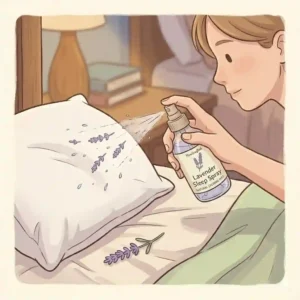
Never spray directly into the center of your pillow where your nose will rest. Concentrated essential oils can cause localized respiratory irritation. Instead, I teach my clients the “V-Pattern.” Hold the bottle 12 to 18 inches away and mist in a ‘V’ shape along the bottom edge and corners of your pillowcase. This ensures the scent rises gently toward your face as body heat warms the fabric, providing a steady, low-dose aromatic release.
The Conditioning Phase (Days 1-14)
During the first two weeks, consistency is more important than volume. Use exactly two pumps of your chosen spray every single night, precisely 10 minutes before getting into bed. This 10-minute buffer allows the water or alcohol carrier to flash off, leaving only the therapeutic oils. You are building a Pavlovian response. Your brain must learn that this specific concentration of linalool equals sleep.
Maintenance and Fabric Cycling (Days 15-30)
By week three, you will notice “olfactory fatigue”—the spray won’t smell as strong to you. Do not increase the number of sprays. Your brain is still registering the chemical compounds even if your conscious mind is ignoring the scent. To maintain efficacy, ensure you wash your pillowcases weekly in unscented detergent. Detergents with heavy synthetic perfumes will chemically clash with the essential oils in your spray, creating a chaotic sensory environment that can actually disrupt your circadian rhythm.

The “Overactive Mind” Case Study: Matching Sprays to User Profiles
A perfect product can fail entirely if matched to the wrong user. I see this constantly in my consulting practice. Let’s look at three common user profiles and why specific formulations are necessary to solve their unique sleep disruptions.
Profile 1: The Sunday Night Ruminator
This is the person whose mind races with Monday’s to-do lists. They don’t have clinical insomnia, but they suffer from acute situational anxiety. For this profile, the OSEA Vagus Nerve Spray is the ultimate solution. The sharp botanical notes of juniper demand immediate conscious attention, briefly pulling the user out of their anxiety spiral, before the slow-release lavender and meadowfoam matrix eases them into a parasympathetic state. A cheap, fast-fading spray will fail here because the ruminator will outlast the scent.
Profile 2: The Night Shift Healthcare Worker
Sleeping at 9:00 AM requires powerful environmental manipulation. Sunlight and daytime noises are constant threats. For this user, the This Works Deep Sleep is mandatory. The heavy vetiver base note acts as a sensory anchor. When the sun slips past the blackout curtains, the deep, earthy scent profile grounds the user, overriding the circadian signal that it’s daytime. A light, floral spray like Asutra simply lacks the depth to trick the brain into thinking it’s midnight.
Profile 3: The Sensory-Seeking Child
Children who struggle to transition from playtime to bedtime don’t need therapeutic-grade aromachology; they need a comforting, predictable psychological trigger. The Bath & Body Works Lavender Vanilla excels here. The synthetic vanilla is sweet and instantly recognizable. It acts as a definitive “end of day” marker. Using an expensive, complex botanical blend on a 6-year-old is a waste of money and may actually be too astringent for their highly sensitive olfactory bulbs.
Problem to Solution: Overcoming Common Aromatherapy Pitfalls
Even the best lavender sleep spray can cause frustration if used incorrectly. Let’s troubleshoot the three most common problems my clients report.
Problem 1: “It’s staining my silk pillowcases.”
Solution: Silk and satin are highly susceptible to lipid staining. If you are using a product with a heavy carrier oil (like jojoba or castor oil), it will leave a dark ring. The solution is twofold: switch to an alcohol/water-based formulation (like This Works), and spray the underside of your pillow. The volatile compounds will still permeate the fabric and reach your nose, but the liquid droplets will never touch the side you sleep on.
Problem 2: “The scent disappears before I fall asleep.”
Solution: You are likely suffering from rapid evaporation due to a dry bedroom environment. Essential oils flash off rapidly when the relative humidity drops below 30%. Introduce a small bedroom humidifier. Alternatively, lightly mist the spray onto a damp washcloth and place it on your nightstand. The slow evaporation of the water in the cloth will act as a time-release mechanism for the lavender oils.
Problem 3: “It’s making me sneeze or causing a stuffy nose.”
Solution: You are experiencing mild mucosal irritation. Many users spray their bed and immediately lie down, inhaling microscopic liquid droplets of essential oil before they have settled. You must implement a 10-to-15 minute gap between spraying and sleeping. If the problem persists, you are likely reacting to a synthetic fixative; switch strictly to the Asutra or another 100% pure botanical option.

How to Choose a Lavender Sleep Spray That Actually Works
The market is flooded with lavender-scented water marketed as sleep aids. To filter out the marketing hype, you need a strict evaluation framework. Here is how I judge a product’s true value.
1. Analyze the Atomizer Quality
The pump mechanism is arguably as important as the liquid inside. A cheap pump spits heavy droplets that soak your bedding and evaporate unevenly. You want a “fine mist” mechanical actuator. This aerosolizes the liquid into micro-droplets, vastly increasing the surface area of the oil. Greater surface area means faster interaction with the room’s air currents, delivering the scent to your nose without making your pillow feel damp.
2. Identify the Carrier Matrix
Look closely at the ingredient list. Is the first ingredient water, alcohol, or an oil? Alcohol bases dry the fastest and project the scent furthest, making them ideal for quick results. Oil bases (like jojoba or meadowfoam) have lower projection but massive longevity, keeping the scent alive all night. Water-based sprays require chemical emulsifiers to blend with the oils; if you see “Polysorbate 20,” it’s a water base.
3. Check for Complementary Base Notes
Lavender is classified in perfumery as a “top to middle note.” Biologically, this means its molecular weight is light, and it evaporates quickly. A high-quality spray will always include a heavier “base note” like vetiver, cedarwood, or frankincense. If a product lists only “water and lavender oil,” expect it to vanish in 20 minutes.
Pure Essential Oils vs. Synthetic Fragrances: What Your Brain Needs
One of the most fiercely debated topics in the sleep community is whether synthetic fragrances can induce sleep as effectively as pure botanical extracts. The answer depends entirely on whether you are seeking a psychological or a physiological result.
Pure Lavandula angustifolia contains linalool. When you inhale real linalool, it physically enters your bloodstream via the lung mucosa and crosses the blood-brain barrier. Studies documented by the Sleep Foundation confirm that this chemical interaction actively depresses the central nervous system, lowering heart rate and blood pressure. It is a biological certainty.
Synthetic lavender (often labeled simply as “fragrance” or “parfum”) is synthesized in a lab to mimic the smell. It contains no therapeutic linalool. However, humans are profoundly programmable creatures. If you associate a specific synthetic smell with comfort and safety over a period of weeks, your brain will begin to release serotonin and melatonin out of habit when exposed to it. So, while pure oils offer an immediate biological shortcut, synthetic blends can be highly effective tools for long-term behavioral conditioning, often at a fraction of the cost.
What to Expect: Real-World Performance and Olfactory Fatigue
Setting realistic expectations is crucial. A lavender sleep spray is not an anesthetic; it will not knock you out if you’ve just consumed a double espresso or spent three hours scrolling on a brightly lit smartphone. It is an environmental optimizer.
In real-world performance, expect the first three nights of use to be the most profound. You will actively notice the scent, and the novelty of the sensory experience will pleasantly distract a racing mind. By day seven, the scent will seem roughly 50% weaker. This is olfactory fatigue—your brain is optimizing its sensory input by tuning out a constant, non-threatening stimulus.
Do not mistake this fatigue for the product “going bad.” The volatile organic compounds are still entering your system and activating your parasympathetic pathways. If you want to “reset” your nose, take a 48-hour break from the spray every two weeks. This simple cycle prevents full habituation and keeps the therapeutic response sharp over months of continuous use.
Features That Actually Matter (And Marketing Hype to Ignore)
When browsing products, you will encounter a wall of wellness jargon. Here is my expert filter on what moves the needle, and what is just designed to empty your wallet.
What Actually Matters:
-
Opaque or Dark Glass Bottles: Essential oils degrade rapidly when exposed to ultraviolet light. A spray in a clear plastic bottle left on a sunny nightstand will lose its potency in weeks. Amber glass, cobalt glass, or fully opaque PET plastic are non-negotiable features for preserving chemical integrity.
-
Third-Party GC/MS Testing: For pure oil products, Gas Chromatography/Mass Spectrometry testing ensures the lavender hasn’t been adulterated with cheaper synthetics.
Hype to Ignore:
-
“Crystal-Infused” Formulas: Sprays that claim to be infused with amethyst or quartz energy add zero biochemical or aromatherapeutic value. You are paying a heavy premium for a rock at the bottom of a bottle.
-
“Clinical Strength”: In the realm of aromatherapy, this is an unregulated marketing term. There is no FDA-recognized “clinical strength” for a room mist. Rely on the ingredient list, not the bold text on the front label.
Long-Term Cost & Maintenance: The Hidden Economics of Sleep
Most buyers look only at the initial sticker price. But calculating the “cost per sleep” reveals the true economics of these products.
Let’s break down the math. A standard 75ml premium bottle, like the This Works formula, costs in the $25-$35 range. A 75ml atomizer yields approximately 750 individual sprays. If you follow my recommended V-Pattern technique (two sprays per night), that single bottle contains a 375-day supply. You are effectively paying pennies per night for therapeutic-grade sleep optimization.
Conversely, budget sprays that use heavy pump mechanisms (yielding only 200 sprays per bottle) and require 5-6 pumps per night because of their rapid evaporation rate will run out in less than 40 days. Suddenly, replacing a “cheap” $10 bottle nine times a year becomes far more expensive than buying one premium bottle annually. My advice? Invest heavily in a high-efficiency atomizer; the long-term ROI on your sleep quality, and your wallet, is immense.
Safety, Fabric Compatibility, and Pet Considerations
It would be irresponsible to discuss environmental aromatics without addressing the surrounding household. What is relaxing for you might be hazardous to your immediate environment.
First, let’s talk about fabrics. Avoid using heavy, castor oil-based sprays on moisture-wicking athletic bedding or advanced cooling mattresses. These high-tech fabrics rely on microscopic pores to vent body heat. Oil-based sprays will clog these pores over time, destroying the breathability of your $2,000 mattress. Stick to water/alcohol-based formulas if you use specialized cooling sheets.
Secondly, and critically: pet safety. Cats and dogs lack the specific liver enzyme (glucuronyl transferase) required to break down many essential oils, including concentrated linalool. While a light misting on your pillow is generally safe if your pet sleeps at the foot of the bed, you should never use a heavy lavender sleep spray if your cat habitually sleeps directly on your face or pillow. If you sleep with pets near your head, consider switching to a heavily diluted, purely synthetic formulation, as they do not contain the raw botanical compounds that cause hepatic toxicity in felines.
✨ Don’t Miss These Exclusive Deals!
🔍 Ready to upgrade your sleep hygiene? Click on any highlighted item to check current pricing and availability. These tools will help you create an authentic, restful environment you’ll look forward to every night!

Conclusion
Navigating the world of sleep hygiene products requires looking past the glossy marketing to understand the biochemical reality of how we rest. A high-quality lavender sleep spray is not just room perfume; it is a targeted tool that uses volatile organic compounds and behavioral conditioning to signal to your nervous system that the day is definitively over.
Whether you invest in the long-lasting, vetiver-anchored brilliance of the This Works formula, or utilize the budget-friendly psychological cue of a Bath & Body Works mist, the key to success is consistency. Implement the V-Pattern spraying technique, be mindful of olfactory fatigue, and treat your sleep environment with the respect it deserves. By integrating the right aromatic profile into a structured nightly ritual, you are not just masking bedroom odors—you are actively engineering a better, more restorative tomorrow.
FAQs
❓ What is the best way to apply a lavender sleep spray?
✅ Hold the bottle 12 to 18 inches away and mist in a ‘V’ shape along the bottom edge and corners of your pillowcase. This prevents localized respiratory irritation while allowing the scent to rise gently as your body heat warms the fabric…
❓ Can a lavender sleep spray actually cure my insomnia?
✅ No. It is an environmental optimizer, not a medical cure. It utilizes compounds like linalool to encourage parasympathetic relaxation, making it easier to fall asleep, but it cannot cure clinical insomnia without accompanying sleep hygiene adjustments…
❓ Are lavender sleep sprays safe for all types of bedding?
✅ Not always. Sprays with heavy carrier oils like jojoba can stain silk and satin, and they may clog the pores of advanced moisture-wicking cooling sheets. For these fabrics, strictly use water or alcohol-based formulas that evaporate cleanly…
❓ Why does my lavender sleep spray stop smelling so strong after a week?
✅ This is called olfactory fatigue. Your brain tunes out constant sensory input to remain alert to new environmental changes. The active chemical compounds are still relaxing your nervous system, even if your conscious mind no longer registers the scent…
❓ Is a synthetic lavender sleep spray as good as essential oils?
✅ Biologically, no; pure essential oils contain linalool which actively lowers heart rate. Psychologically, yes; a synthetic scent can successfully condition your brain to associate the smell with bedtime, providing a highly effective behavioral trigger over time…
Recommended for You
- 5 Best Essential Oil Companies Canada: 2026 Top Expert Picks
- 5 Best Bath Balms for Ultimate Relaxation: 2026 Expert Review
- 5 Best Lavender Pillow Spray Options for Deep Sleep (2026 Expert Guide)
Disclaimer: This article contains affiliate links. As an Amazon Associate, I earn from qualifying purchases. If you purchase products through these links, we may earn a small commission at no additional cost to you.
✨ Found this helpful? Share it with your friends! 💬🤗
[addtoany]
