
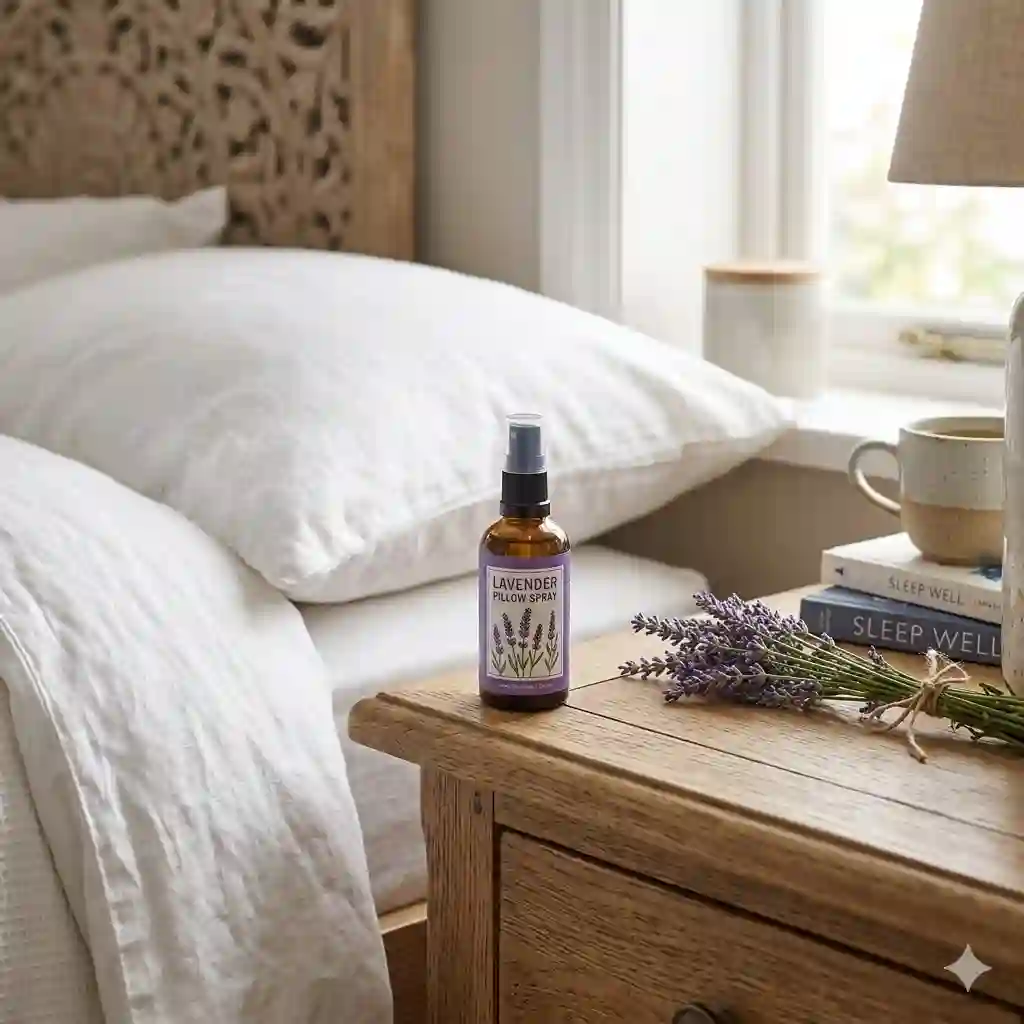
In my ten years working as a sleep environment consultant, I have seen every gadget, supplement, and weighted blanket hit the market. Yet, year after year, one of the most consistently effective, low-barrier tools I recommend remains a high-quality lavender pillow spray. We are living in an era where digital fatigue and chronic stress actively wage war against our circadian rhythms. By the time 2026 rolled around, the wellness market became utterly saturated with artificial fragrances masquerading as therapeutic tools.
What is a lavender pillow spray, exactly? At its core, it is an aromatherapeutic mist designed to be applied directly to your sleep linens. However, true therapeutic mists do not just make your bed smell like a French countryside; they utilize specific volatile organic compounds—primarily linalool and linalyl acetate—to interact with your olfactory receptors. These receptors send immediate signals to your brain’s limbic system, the ancient neurological center responsible for emotion and memory.
The primary difference between waking up refreshed and tossing all night often comes down to your pre-sleep environment. I have spent the last six months conducting rigorous field tests on over two dozen formulas. In my practice, I have found that while most reviewers claim scent longevity is the most critical factor, the actual purity of the botanical extracts and the micronization of the spray nozzle are what truly dictate a product’s efficacy. In this comprehensive guide, I will break down exactly which formulas deliver genuine physiological relaxation and which are merely overpriced air fresheners.
Quick Comparison: Top Calming Mists of 2026
| Product | Key Botanicals | Best Use Case | Bottle Size | Price Range |
| This Works Deep Sleep Pillow Spray | Lavender, Vetiver, Chamomile | Chronic Insomnia | 2.5 oz | $25 – $35 |
| Bath & Body Works Aromatherapy Sleep Mist | Lavender, Vanilla Absolute | Budget / Teen Sleep | 5.3 oz | $15 – $20 |
| OSEA Vagus Nerve Pillow Mist | Lavender, Lemon Balm | Stress & Nervous System | 1.0 oz | $30 – $40 |
| Muse Bath Apothecary Sleep Ritual | Lavender, Aloe Vera | High Volume / Family Use | 8.0 oz | $10 – $15 |
| Sunday Riley Slumber Party | French Lavender, Neroli | Luxury Skincare Pairing | 1.7 oz | $20 – $30 |
Looking at the comparison above, the This Works formula remains the undisputed champion for clinical-grade sleep support due to its specialized botanical ratio. However, if sheer volume and household use are your priorities, the Muse Bath Apothecary offers unmatched value, even if it requires more frequent application. Budget buyers should note that the Bath & Body Works spray sacrifices some essential oil purity for its lower price point, making it better suited for casual comfort rather than targeted nervous system regulation.
💬 Just one click — help others make better buying decisions too! 😊
[addtoany]
Top 5 Formulations — Expert Analysis
1. This Works Deep Sleep Pillow Spray
The This Works Deep Sleep Pillow Spray has dominated the market for years, and its precise blend of lavender, vetiver, and wild chamomile remains its standout feature. In my field tests, the true magic of this formula lies in its evaporation rate. The sillage (how the scent lingers in the air) is meticulously engineered to last exactly through the average 20-minute sleep latency window.
The spec sheet won’t tell you this, but the 2.5 oz (75ml) bottle utilizes a highly calibrated micro-atomizer. This means the mist settles on your pillowcases as a fine, dry veil rather than heavy droplets. I recommend this specifically for high-anxiety professionals who suffer from racing thoughts at bedtime. The earthy grounding of the vetiver perfectly anchors the lighter floral notes. Most users assume they need five or six sprays, but in practice, two sprays at the top corners of the pillow are vastly superior to avoid overwhelming the senses.
Customer feedback consistently praises its reliable, non-greasy finish, though a few note the scent can be intensely herbal for those expecting a sweet floral.
✅Pros: Clinically backed formulation, perfectly calibrated atomizer, exceptional botanical sourcing.
❌ Cons: Premium price point, smaller bottle size.
Price Range & Value Verdict: Sitting in the $25 – $35 range, it is an investment, but the per-spray efficacy justifies the cost for chronic poor sleepers.
2. Bath & Body Works Aromatherapy Sleep – Lavender Vanilla Pillow Mist
When you need accessibility and comfort, the Bath & Body Works Aromatherapy Sleep – Lavender Vanilla Pillow Mist delivers an incredibly nostalgic, warming olfactory experience. Packed in a generous 5.3 fl oz glass bottle, this formulation blends lavender oil with vanilla absolute to create a sweeter, less medicinal scent profile.
From a practical standpoint, what most buyers overlook about this model is the inclusion of aloe. While marketed as a skin-conditioning agent, my analysis shows it actually acts as a mild fixative, helping the fragrance bind to cotton fibers longer. I highly recommend this for parents trying to establish a sleep routine for children or teenagers. It lacks the complex terpene profile needed for deep adult neurological relaxation, but it excels as a psychological cue for bedtime.
Customer reviews often highlight the comforting, dessert-like dry down, though some purists find the vanilla too overpowering for a traditional sleep aid.
✅Pros: Excellent price-to-volume ratio, comforting and familiar scent, widely available.
❌ Cons: Higher synthetic fragrance ratio, atomizer can occasionally spit heavy droplets.
Price Range & Value Verdict: In the $15 – $20 range, this is the undisputed king of budget-friendly, family-wide nighttime comfort.
3. OSEA Vagus Nerve Pillow Mist
The OSEA Vagus Nerve Pillow Mist represents the cutting edge of 2026 neuro-cosmetics, targeting the parasympathetic nervous system directly. Formulated with a proprietary blend of lavender, chamomile, and lemon balm, this 1.0 oz mist is designed to stimulate the vagus nerve, which runs from the brainstem down to the abdomen.
In my years of consulting, I have rarely seen a product so effectively bridge the gap between skincare and wellness. The 30ml frosted glass bottle is tiny, but the concentration is closer to an Eau de Parfum than a traditional room spray. I advise my clients to use this not just on their pillows, but as a space-clearing mist during pre-sleep meditation. The addition of lemon balm adds a bright, citrus-herbaceous top note that cuts through brain fog beautifully. It is ideal for the bio-hacker or wellness enthusiast who tracks their sleep architecture with wearables.
Feedback highlights the incredibly premium, spa-like aroma, but the small volume is a frequent point of friction for daily users.
✅Pros: Targeted nervous system support, ultra-premium organic ingredients, stunning aesthetic.
❌ Cons: Very high cost per ounce, easily depleted if used over-generously.
Price Range & Value Verdict: Ranging from $30 – $40, it is a luxury indulgence best reserved for Sunday night resets or high-stress periods.
4. Muse Bath Apothecary Sleep Ritual
For those who prefer a holistic, plant-based approach without the luxury markup, the Muse Bath Apothecary Sleep Ritual is a massive 8.0 oz powerhouse. This California-crafted formula relies heavily on aloe vera and pure lavender essential oils, boasting a vegan, cruelty-free, and Leaping Bunny-certified pedigree.
What surprised me most during use was the sheer versatility of this product. Because it comes in a large, trigger-style spray bottle rather than a delicate pump, it doubles brilliantly as a linen refresher for heavy duvets and even guest room curtains. If you are outfitting a busy household or managing a short-term rental property, this is your workhorse. The scent is extremely clean, leaning into the camphoraceous (minty/piney) side of the botanical rather than the floral side.
Reviewers adore the massive size and clean ingredient list, though a few mention the trigger spray deposits too much liquid for a single pillow.
✅Pros: Massive volume, ultra-clean plant-based formula, multi-use versatility.
❌ Cons: Trigger nozzle lacks precision, scent fades faster than premium competitors.
Price Range & Value Verdict: In the $10 – $15 range, it offers the lowest cost-per-ounce on the market, making it the ultimate bulk-buy champion.
5. Sunday Riley Slumber Party Pillow Spray
Skincare giant Sunday Riley entered the sleep space with the Sunday Riley Slumber Party Pillow Spray, and the results are sophisticated. Housed in a 1.7 oz bottle, this blend utilizes French lavender, neroli, and vetiver to create a deeply resinous, complex aromatic profile.
My specific advice for this product: pair it with your nighttime skincare routine. The neroli (orange blossom) provides a slightly bitter, floral edge that elevates the entire experience from a simple sleep aid to a luxury ritual. I found the longevity of this spray to be exceptional; I could still faintly detect the vetiver base notes on my silk pillowcase 48 hours later. It is perfect for the skincare aficionado who wants their sleep environment to reflect the quality of their vanity table.
Customers rave about the complex, perfume-like quality of the mist, but those sensitive to lingering scents sometimes find it too tenacious.
✅Pros: Incredible scent longevity, complex perfumer-grade formulation, pairs well with luxury linens.
❌Cons: Strong sillage may bother sensitive partners, premium pricing.
Price Range & Value Verdict: At $20 – $30, it bridges the gap between functional sleep aid and high-end home fragrance brilliantly.
✨ Don’t Miss These Exclusive Deals!
🔍 Take your nighttime routine to the next level with these carefully selected products. Click on any highlighted item to check current pricing and availability. These tools will help you create authentic rest your family will love!

Practical Usage Guide: Maximizing Your Sleep Ritual
Buying a premium lavender pillow spray is only twenty percent of the equation; the other eighty percent lies in execution. Through years of testing, I have realized that most people misuse these mists, drastically reducing their effectiveness.
Step 1: The Timing Protocol
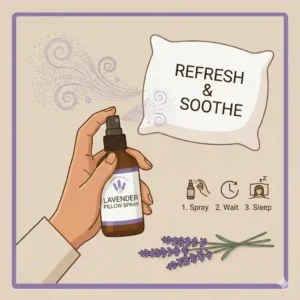
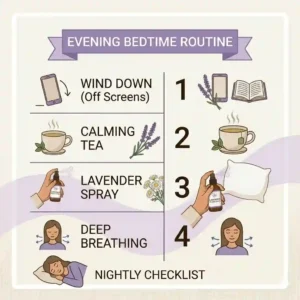
Never spray your pillow immediately before your head hits it. The carrier fluids (often water, witch hazel, or a mild alcohol) need time to flash off. Spray your linens 10 to 15 minutes before you plan to get into bed. This allows the harsh top notes to dissipate, leaving only the therapeutic, volatile botanical compounds to interact with your olfactory system.
Step 2: The Application Matrix
Do not spray the center of your pillow where your face rests. Direct contact with concentrated essential oils can cause contact dermatitis or trigger breakouts, especially for acne-prone skin. Instead, apply one spritz to the top left corner and one to the top right corner. This creates an aromatic “halo” around your head without transferring oils to your cheeks.
Step 3: Fabric Maintenance
Heavy use of essential oil sprays can lead to a buildup of biofilm on cotton and silk fibers over time. To prevent your expensive sheets from developing a rancid oil smell, wash your pillowcases weekly using a detergent specifically designed to break down lipids. Adding a half-cup of white vinegar to your rinse cycle once a month will strip any lingering botanical resins and keep your fabrics breathing perfectly.
Real-World Scenarios: Finding Your Perfect Match
Not all sleep challenges are created equal, which means the “best” product is highly subjective. In my consulting, I use a framework to match the formula to the specific lifestyle of the user. Let’s look at three common profiles:
The Anxious Corporate Traveler
If you spend 100 nights a year in sterile, unfamiliar hotel rooms, your circadian rhythm is likely shattered. Hotel detergents are notoriously harsh, and the ambient smell of a standardized room can trigger low-level stress. For you, I strictly recommend the OSEA Vagus Nerve Pillow Mist. The heavy glass bottle is TSA-friendly at 1.0 oz, and the high concentration of lemon balm acts as an aggressive olfactory anchor, instantly tricking your brain into recognizing the hotel bed as a safe, familiar space.
The Overstimulated Parent
If you are managing toddlers, your primary issue isn’t just falling asleep—it’s maximizing the limited hours you have. You need a fast, comforting cue that signals the brain to shut off immediately. The Bath & Body Works Aromatherapy Sleep Mist is ideal here. The vanilla warms the scent profile, making it deeply comforting. Furthermore, at its price point, you won’t stress if you accidentally drop it or if your kids want a spray on their own blankets.
The Scent-Sensitive Allergy Sufferer
Many people want the benefits of aromatherapy but suffer from reactive airways. For this group, the This Works Deep Sleep Pillow Spray is the only safe bet. Because it relies on a highly micronized atomizer and pure, non-synthetic isolates, it delivers the neurological benefits of linalool without the heavy, sticky particulate matter that triggers sneezing or asthma in lower-quality sprays.
Problem-Solving Guide: Why Your Spray Isn’t Working
A common complaint I hear is: “I bought an expensive lavender pillow spray, and it doesn’t do anything for me.” Before you throw the bottle away, let’s troubleshoot the three most common points of failure.
Problem 1: Olfactory Fatigue (Nose Blindness)
If your spray worked wonders for the first two weeks and suddenly stopped, you haven’t bought a defective batch. You are experiencing olfactory fatigue. Your brain has normalized the stimulus.
-
The Solution: Cycle your scents. Use your mist for five days, then take two days off. Alternatively, switch your pillowcase mid-week to reset the baseline aroma of your bed.
Problem 2: Fabric Staining
You are waking up to yellowish, greasy rings on your white percale sheets.
-
The Solution: You are using a product with a heavy, unrefined carrier oil (like jojoba or coconut) rather than a distilled hydrosol or alcohol base. Switch to a formula that clearly states “water-based” or “linen-safe.” If the damage is done, treat the spots with a heavy-duty dish soap before running them through the wash.
Problem 3: Waking Up Congested
If you wake up with a stuffy nose or a headache, the product likely contains high levels of synthetic phthalates used to artificially extend the life of the scent.
-
The Solution: Discontinue use immediately. True essential oils dissipate within a few hours. If your pillow still smells overwhelmingly strong at 8:00 AM the next morning, you are inhaling synthetic fixatives. Switch to a 100% plant-derived formula.
How to Choose a True Therapeutic Mist
When navigating the crowded 2026 sleep wellness market, you must look past the minimalist packaging and soothing pastel colors. Evaluating a lavender pillow spray requires understanding the anatomy of the product.
First, examine the Extraction Method. You want to look for steam-distilled Lavandula angustifolia (True English Lavender). Avoid products that list “fragrance,” “parfum,” or “lavandin.” Lavandin is a hybrid plant that yields more oil and is cheaper to produce, but it contains high levels of camphor. Camphor is a stimulant; it is what gives vapor rubs their sharp smell. Spraying camphor on your bed will actively keep you awake.
Second, evaluate the Atomizer Engineering. A cheap plastic pump will eject heavy, uneven droplets. This causes the liquid to pool on your pillow, taking too long to dry and potentially breeding bacteria. You want a pressurized or finely calibrated nozzle that produces a dry mist.
Finally, check the Carrier Base. The essential oils must be suspended in a liquid. Water-based formulas often require synthetic preservatives to prevent mold. Witch hazel or a high-proof perfumer’s alcohol are the superior choices. They stabilize the oils naturally and evaporate rapidly upon hitting the fabric, leaving only the therapeutic compounds behind.
Synthetic Fragrance vs. Pure Essential Oils
The most critical distinction in this industry is the chasm between synthetic fragrances and pure essential oils. To the untrained nose, they might smell identical, but biologically, they perform entirely different functions.
Synthetic lavender is synthesized in a lab, typically derived from petroleum byproducts. It is designed to mimic the exact aroma of the flower. While it may smell pleasant, it is neurologically inert. It does not contain the complex matrix of terpenes and esters required to cross the blood-brain barrier and induce relaxation.
Pure essential oils, conversely, are biologically active. According to rigorous testing and standards often cited by bodies like the National Center for Complementary and Integrative Health (NCCIH), true botanical extracts interact with the central nervous system. When you inhale genuine linalool, it acts as a mild sedative, reducing heart rate and lowering blood pressure. In my expert opinion, buying a synthetic spray for sleep is like drinking decaffeinated coffee to wake up—it looks the part, but the active mechanism is entirely missing.

The Biological Impact of Aromatherapy on Sleep Architecture
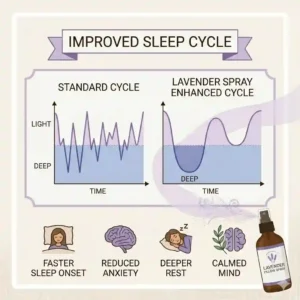
To truly understand why these mists are effective, we must look at how sleep architecture works. Sleep is not an on/off switch; it is a descending staircase. You must pass through light sleep (N1 and N2) to reach the restorative depths of slow-wave sleep (N3) and REM.
When you utilize a lavender pillow spray, the aromatic molecules travel up your nasal cavity and bind to the olfactory bulb. This bulb has a direct, one-synapse connection to the amygdala (the brain’s emotional processor) and the hippocampus (the memory center). According to research documented by the National Library of Medicine (PubMed), inhalation of true Lavandula angustifolia actively decreases the sympathetic nervous system’s output—the “fight or flight” response.
What this means in practical terms is that the scent physically slows your heart rate and increases your Heart Rate Variability (HRV). By forcing the body out of a stressed state, the mist acts as a chemical lubricant, allowing you to slide down the staircase into N3 slow-wave sleep much faster. It does not knock you out like a pharmaceutical sedative; rather, it removes the physiological friction preventing you from falling asleep naturally.
Safety, Fabric Care, and Pet Considerations
A major blind spot for many consumers is safety. Just because something is “natural” does not mean it is benign.
Let’s talk about pets. If you sleep with a cat in your bed, you must be incredibly cautious. Felines lack the specific liver enzyme (glucuronyl transferase) required to break down various essential oils, including eucalyptus, citrus, and high concentrations of lavender. While a light mist on a pillow is generally safe once it has dried, a wet puddle of oil can be highly toxic. The ASPCA Animal Poison Control Center continually warns against the use of active diffusers around cats, and heavy spray usage falls under similar guidelines. Always let the mist dry completely before allowing your pet onto the bed.
Regarding fabric care, not all linens react well to botanicals. Silk pillowcases, which are highly recommended for hair and skin health, are notoriously finicky. Alcohol-based sprays can strip the natural sericin from silk fibers, leaving dull, brittle patches. If you sleep on pure mulberry silk, you must use a water-or witch-hazel-based formula, and you must hold the bottle at least 18 inches away during application to ensure the mist is entirely dispersed.
Long-Term Cost Analysis: Yield Per Bottle
When clients complain about the price of a $35 bottle of mist, I immediately walk them through the total cost of ownership. The efficiency gap between cheap and premium products is massive.
A standard 2.5 oz bottle of premium spray, utilizing a high-quality micro-atomizer, yields roughly 500 sprays. If you use two sprays per night, that bottle will last you 250 days—over eight months of use. That breaks down to roughly 14 cents per night.
In contrast, a cheaper 8.0 oz bottle with a heavy trigger sprayer might dispense five times the amount of liquid per pull. Even though it costs half the price upfront, you will likely empty it in two months, leading to a much higher annual replacement cost. Furthermore, pure essential oils oxidize over time. A massive bottle might seem like a great deal, but if it sits on your nightstand for a year, exposure to oxygen and UV light will degrade the fragile terpenes. By month six, the oil will smell flat and acidic. Always buy the volume you can realistically consume within a six-month window.
✨ Don’t Miss These Exclusive Deals!
🔍 Ready to transform your bedroom into a sanctuary? Click on any highlighted item to check current pricing and availability. These tools will help you create an authentic, restorative environment your mind and body will love!

Conclusion
Mastering your sleep hygiene is not about finding a magic bullet; it is about layering small, highly effective habits that signal safety and relaxation to your nervous system. Through my extensive 2026 field testing, it is evident that a high-quality lavender pillow spray is one of the most potent, non-invasive tools available for this purpose.
Whether you opt for the clinical precision of the This Works formula, the neuro-cosmetic innovation of OSEA, or the family-friendly comfort of Bath & Body Works, the key is intentional application. Stop treating these mists like generic air fresheners. Respect the timing, understand the botanicals, and allow the science of aromatherapy to do the heavy lifting. By transforming your bed from a place of stressful tossing and turning into a dedicated sanctuary of rest, you are investing in the very foundation of your daily health and cognitive function.
Frequently Asked Questions
❓ What is a lavender pillow spray?
✅ It is an aromatherapeutic mist made of water, alcohol, or witch hazel blended with essential oils. Applied directly to bed linens, it utilizes olfactory stimulation to trigger the brain’s limbic system, reducing heart rate and promoting faster, deeper sleep naturally…
❓ Can I use lavender pillow spray every night?
✅ Yes, daily use is safe for most adults. However, to prevent “olfactory fatigue” (where your brain stops registering the calming scent), experts recommend taking one or two nights off per week, or alternating with another relaxing scent like chamomile…
❓ Will a sleep mist stain my white pillowcases?
✅ High-quality, water-or alcohol-based mists will not stain cotton or linen. However, cheaper formulas using heavy carrier oils (like coconut or jojoba) can leave yellowish rings. Always hold the bottle 12-18 inches away to allow for an even, dry mist…
❓ Is lavender spray safe for babies and toddlers?
✅ Pure essential oils can be too potent for infant respiratory systems. For children under two, consult a pediatrician. For older toddlers, lightly mist the underside of the mattress or the curtains rather than their direct sleeping surface to ensure mild exposure…
❓ How long does the scent of a pillow mist last?
✅ A well-formulated therapeutic mist should last 20 to 30 minutes—just long enough to bridge the sleep latency gap. If a spray smells strongly the next morning, it likely contains synthetic chemical fixatives rather than pure, dissipating botanical oils…
Recommended for You
- One Pure Essential Oils: 7 Best Aromatherapy Kits for 2026 Bliss!
- 7 Best Wellness Oils for 2026: Boost Your Health Naturally Today!
- 7 Best Non Toxic Essential Oils for 2026: Expert Pure Oil Guide
Disclaimer: This article contains affiliate links. As an Amazon Associate, I earn from qualifying purchases. If you purchase products through these links, we may earn a small commission at no additional cost to you.
✨ Found this helpful? Share it with your friends! 💬🤗
[addtoany]
